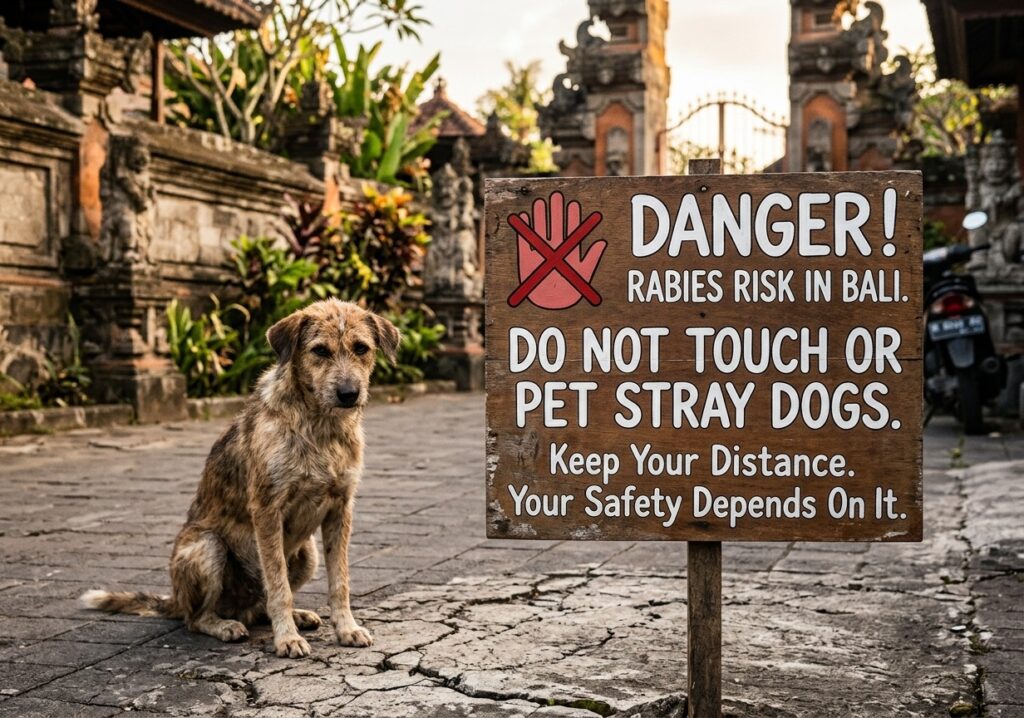
Rabies in Bali. Bali is famous for its world-class surf breaks, spiritual temples, and lush emerald rice terraces. Yet, as you step off the plane into the Island of the Gods, you will immediately notice another iconic presence: dogs. They lounge outside local cafes, trot along busy streets, and sleep peacefully on white-sand beaches.
While petting a friendly beach pup might seem like a heartwarming travel moment, travelers must exercise extreme caution. Bali continues to battle an ongoing rabies risk, and interacting with unfamiliar animals can turn a dream vacation into a medical emergency. Before packing your bags, here is everything you need to know about Bali’s dog population, the reality of rabies, and how to stay completely safe during your journey.
Why Are There So Many Stray Dogs on the Streets of Bali?
To understand why dogs roam everywhere in Bali, you have to look into the island’s rich cultural heritage. Unlike many Western countries where dogs are strictly kept indoors or behind fenced yards, dogs in Balinese culture serve a traditional, functional role.
Historically, the native Bali Heritage Dog (Anjing Kintamani or local island mix) has lived alongside villagers for centuries. They act as natural guards, protecting family compounds (pekarangan) from intruders, snakes, and unwanted pests. In Balinese Hinduism, dogs are also associated with spiritual guardians and play subtle roles in local mythology and daily offerings.
Because of this open-living tradition, many dogs roam freely between private homes and public streets. Over time, rapid urban development, uncontrolled breeding, and a lack of island-wide spay and neuter resources have led to a thriving population of free-roaming dogs across popular hubs like Canggu, Seminyak, Ubud, and Kuta.
Stray Dogs vs. Owned Dogs: Understanding the Difference in Bali
When walking down the streets of Bali, distinguishing between a homeless stray dog and a free-roaming owned dog can be surprisingly tricky.
- Owned Free-Roaming Dogs: A massive portion of the dogs you see on the streets actually have owners. These dogs belong to local families or community members. They spend their days wandering the neighborhood, scavenging food scraps, or visiting beach clubs before returning home at night. Many of these owned dogs receive basic care, food, and rabies vaccinations during local government drives.
- True Stray Dogs (Feral/Unowned): These animals live entirely without human ownership. They rely solely on public trash, generous tourist hand-outs, or charity feeding programs to survive. True strays are far less likely to be vaccinated against rabies or treated for skin conditions like mange.
The Golden Rule for Tourists: Do not assume a dog is safe or vaccinated just because it looks healthy, wears a collar, or behaves gently. In a rabies-endemic environment, any dog bite or scratch must be treated as a potential health emergency.
The Fatal Numbers: Human Rabies Deaths in Bali (2023–2026)
Rabies remains a significant public health focus for Balinese health authorities. Despite ongoing mass vaccination campaigns targeting street dogs, thousands of animal bite incidents occur across the province every single year.
Data from the Bali Health Office (Dinas Kesehatan Provinsi Bali) highlights the seriousness of animal bite incidents and human rabies fatalities over recent years:
- 2023: Bali recorded over 72,700 animal bite incidents, resulting in 9 confirmed human deaths from rabies infection.
- 2024: Health centers reported 55,767 bite incidents across the island, which led to 7 human deaths.
- 2025: Reported bite incidents reached over 49,000 cases, with fatalities rising to 12 human deaths—largely driven by delays in seeking post-exposure vaccination.
- 2026: Health authorities continue to maintain dozens of dedicated Rabies Center clinics (Puskesmas) across all regencies. Ongoing monitoring shows dozens of daily bite reports, with public health warnings remaining at elevated levels in designated red-zone areas like Badung and Denpasar.
Tragically, health officials note that nearly every recorded rabies death in Bali occurred because the victim delayed seeking medical evaluation or failed to complete their Post-Exposure Prophylaxis (PEP) vaccine series immediately after being bitten.
The Danger of Rabies: How the Virus Kills
Rabies is a deadly viral disease (Lyssavirus) that attacks the central nervous system. It spreads primarily through the saliva of an infected animal via bites, scratches, or licks on broken skin and mucous membranes (such as the eyes, nose, or mouth).
Once the virus enters the human body, it travels slowly along the peripheral nerves toward the spinal cord and brain. This incubation period can last anywhere from a few weeks to several months, depending on the location of the bite relative to the brain.
How Rabies Affects the Human Body
The true danger of rabies lies in its clinical progression:
- Initial Symptoms: The disease begins with flu-like symptoms, including fever, headache, muscle weakness, and a strange burning or tingling sensation at the site of the bite.
- Neurological Phase: As the virus reaches the brain, it causes acute encephalitis (brain inflammation). The patient experiences intense agitation, confusion, hallucinations, and involuntary muscle spasms.
- Hydrophobia and Aerophobia: A signature symptom of rabies is severe pain when trying to swallow liquid, leading to an extreme fear of water (hydrophobia) and fear of fresh air drafts (aerophobia).
- Coma and Fatal Outcome: The virus eventually causes cardiac arrest or respiratory failure as the brain’s control centers shut down.
Critical Medical Fact: Once clinical symptoms of rabies appear, the disease is nearly 100% fatal. There is no effective cure after symptoms start. However, rabies is 100% preventable if you clean the wound properly and receive post-exposure vaccinations immediately after contact.
Essential Safety Rules for Tourists Travelling to Bali
To enjoy your Bali vacation without medical scares, keep these practical safety guidelines in mind:
- Do Not Touch or Pet Street Animals: No matter how cute, sleepy, or helpless a puppy or dog looks, keep your distance. Never attempt to stroke, pick up, or pose for pictures with stray animals.
- Avoid Feeding Animals: Hand-feeding strays can trigger unpredictable defensive reactions or cause dogs to pack together aggressively over food competition.
- Watch Children Closely: Children are naturally drawn to animals and are most vulnerable to bites on the head and face due to their height. Teach your children never to approach street dogs or monkeys.
- Know the First-Aid Protocol: If you are bitten, scratched, or licked on broken skin by any animal in Bali:
- Wash immediately: Scrub the wound vigorously under running water with soap for at least 15 minutes. This simple step dramatically reduces viral load.
- Apply Antiseptic: Disinfect the wound with povidone-iodine or alcohol.
- Seek Immediate Medical Care: Go directly to a major clinic or hospital (Puskesmas or international hospital) to begin the Post-Exposure Prophylaxis (PEP) vaccine series and rabies immunoglobulin if required.