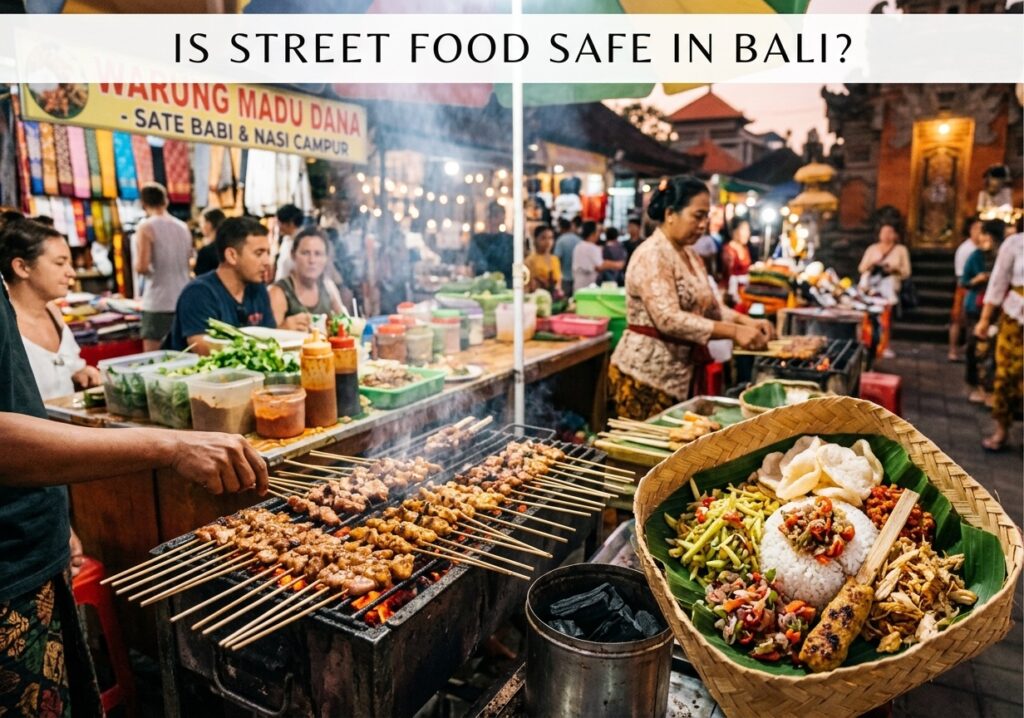
Is Street Food Safe in Bali? Bali is a world-renowned paradise for food lovers. From crispy Babi Guling (suckling pig) and fragrant Nasi Campur to sizzling Sate Lilit, the island’s culinary landscape is as vibrant as its landscapes. Walk down any street in Ubud, Seminyak, or Canggu, and you will be greeted by the irresistible aromas wafting from local street vendors and warungs (family-owned eateries).
However, many first-time visitors hesitate to indulge due to a common travel fear: Bali Belly.
Is street food in Bali actually safe to eat, or are you guaranteed a trip to the local clinic? Here is an honest, practical guide on how street food hygiene works in Bali, what causes stomach bugs, and how to sample local delicacies without ruining your vacation.
What Is “Bali Belly” and What Really Causes It?
“Bali Belly” is the popular tourist term for traveler’s diarrhea. It is a digestive tract disorder that occurs when your body encounters unfamiliar bacteria, viruses, or parasites.
Common symptoms include:
- Abdominal cramping and bloating
- Nausea and vomiting
- Frequent, watery diarrhea
- Mild fever and fatigue
- Dehydration
Contrary to popular belief, Bali Belly is rarely caused by “poisonous” food. Instead, it is typically triggered by two main factors:
- Unfamiliar Bacterial Flora: Your digestive system is accustomed to the bacteria profile of your home country. Introducing local Indonesian spices, heavy coconut oil, and new strains of standard bacteria (like E. coli or Salmonella) can temporarily disrupt your gut flora, even if the food is prepared hygienically.
- Poor Sanitation and Cross-Contamination: Traditional street stalls (warung kaki lima) often lack running water or refrigeration. Food left standing in warm tropical temperatures for hours allows bacteria to multiply rapidly.
Is Street Food Safe in Bali? The Street Stall Reality
The short answer is yes, street food in Bali is generally safe—provided you know how to choose the right vendors.
Millions of locals, expats, and savvy travelers eat street food in Indonesia every single day without any issues. The secret lies in understanding how street food culture operates in Bali:
- High-Turnover Warungs Are Safest: Stalls that serve a constant stream of local customers cook their ingredients continuously. Freshly cooked, piping-hot food carries a significantly lower risk of contamination than food sitting out at room temperature.
- The Water Myth: Many travelers worry about water and ice. Today, most commercial street vendors and warungs in tourist areas purchase certified, purified ice blocks (Es Kristal) supplied by local factories. Tap water in Bali is not safe to drink, but the ice served in most established stalls is filtered and safe.
How to Spot a Safe Street Food Vendor in Bali
You do not need to avoid street food entirely to stay healthy. Instead, follow these golden rules to identify hygienic food stalls:
1. Follow the Local Crowd
If you see a street cart surrounded by local Balinese families, motorcycle taxi drivers, and office workers, eat there. High turnover means ingredients are replenished quickly and spent oil is replaced frequently. Avoid stalls that look completely empty or abandoned during peak meal times.
2. Choose Freshly Cooked, Hot Dishes
Heat kills bacteria. Opt for dishes cooked directly in front of you over high heat, such as fresh Nasi Goreng (fried rice), Mie Goreng (fried noodles), or freshly grilled Sate (skewers). Be cautious with pre-cooked dishes displayed behind glass cabinets if they have been sitting in the humidity for hours.
3. Observe Basic Food Handling
Take a quick look at the vendor’s setup:
- Are raw meats kept separate from cooked items?
- Is the cooking area relatively clean and free of flies?
- Does the cook use utensils or gloves when handling ready-to-eat food?
4. Be Mindful of Fresh Fruits and Shellfish
Fruit that you peel yourself—like bananas, mangos, passionfruit, and dragonfruit—is completely safe. Be cautious with pre-cut fruits sold in unsealed plastic bags on the street, as they may have been washed in tap water. Similarly, save seafood and shellfish for reputable coastal restaurants rather than roadside carts.
What to Do If You Get Bali Belly: Step-by-Step Recovery
Even cautious travelers occasionally experience a sensitive stomach. If Bali Belly strikes, follow this emergency recovery plan:
- Prioritize Rehydration Immediately: Dehydration is the primary danger of traveler’s diarrhea. Drink plenty of bottled water mixed with Oral Rehydration Salts (ORS) like Norit or Oralit, available at any local pharmacy (Apotek).
- Drink Fresh Young Coconut Water: Kelapa Muda (young coconut water) is widely available across Bali and serves as a natural, potassium-rich electrolyte drink that calms inflamed stomach linings.
- Stick to the BRAT Diet: Once your appetite returns, eat bland foods: Bananas, Rice (plain white rice or porridge), Applesauce, and Toast.
- Visit a Local Pharmacy (Apotek): Balinese pharmacists are highly experienced in treating travel ailments. They can supply activated charcoal tablets (Norit), anti-motility medication, or recommend a local doctor if antibiotics are necessary.
- Know When to See a Doctor: If you experience severe dehydration, high fever, blood in your stool, or symptoms lasting longer than 48 hours, call a home-visit doctor service or visit an international clinic (such as BIMC or Siloam Hospitals).
Final Verdict: Should You Eat Street Food in Bali?
Refusing to eat local street food means missing out on one of the rich, authentic experiences Bali has to offer. By choosing busy vendors, sticking to freshly cooked hot dishes, and maintaining clean hands (carry hand sanitizer everywhere!), you can safely enjoy Bali’s incredible culinary heritage.