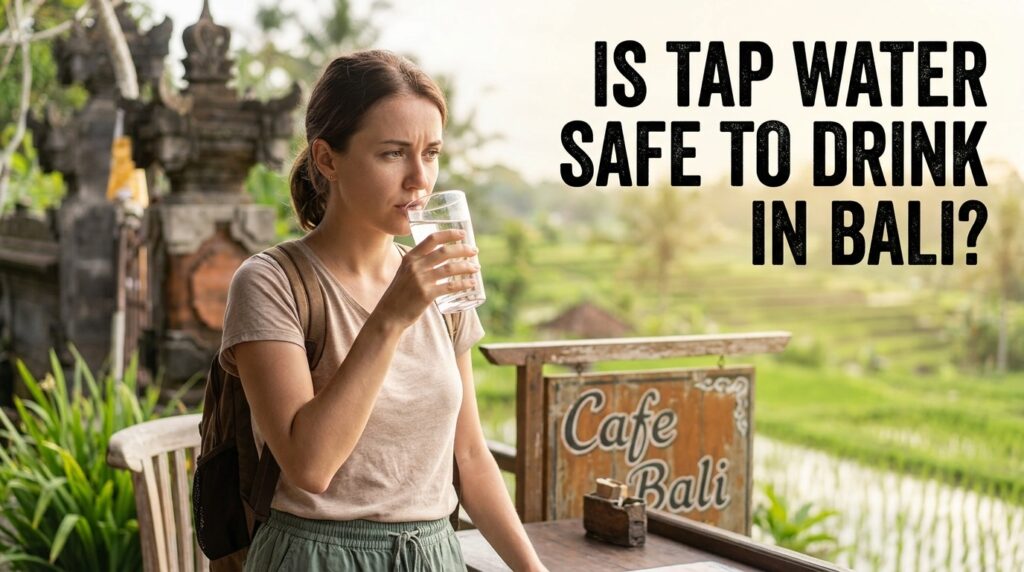
Is tap water safe to drink in Bali? When planning a trip to Bali, travelers usually focus on finding the best surf spots, booking jungle villas in Ubud, or hunting down the island’s best coffee shops. However, one fundamental question pops up in every traveler’s search bar before landing at Ngurah Rai International Airport: “Can you drink the tap water in Bali?”
The short answer is no. Tap water in Bali is not safe for drinking directly from the faucet for international tourists—or even for most locals.
Here is a complete breakdown of why tap water in Bali isn’t potable, how to avoid the notorious “Bali Belly,” and smart ways to stay hydrated safely during your tropical getaway.
Why Is Tap Water Unsafe in Bali?
Unlike many Western countries where municipal tap water undergoes rigorous filtration and chemical treatment to make it safe directly from the pipe, Bali’s water infrastructure operates differently.
The main reasons tap water isn’t potable in Bali include:
- Inconsistent Filtration Infrastructure: Much of Bali’s municipal water supply comes from groundwater, rivers, or local reservoirs. While initial municipal treatment exists, the pipes carrying the water to homes, hotels, and businesses are often outdated, corroded, or cracked, allowing contaminants to seep in along the way.
- Bacterial Risks: Untreated or poorly treated water in tropical environments can harbour harmful bacteria like Escherichia coli (E. coli), Salmonella, and Giardia.
- Heavy Minerals and Metals: Ground water in volcanic regions like Bali often contains high levels of minerals and sediments that your digestive system isn’t used to processing.
Drinking unfiltered tap water is the single fastest way to contract a severe stomach bug, commonly known among travelers as “Bali Belly” (gastroenteritis).
What Happens If You Accidental Drink Tap Water?
If you swallow a mouthful of tap water by accident while brushing your teeth or showering, don’t panic. A tiny drop won’t instantly ruin your trip, but swallowing a full glass of untreated tap water can lead to unpleasant symptoms within 12 to 48 hours, including:
- Severe abdominal cramping and bloating
- Frequent diarrhea
- Nausea and vomiting
- Low-grade fever and general fatigue
- Dehydration
Smart Hydration Guide: How to Stay Safe in Bali
Staying hydrated in Bali’s tropical heat is essential, but doing it safely requires a few daily habits:
1. Drink Bottled Water or Refill Gallons
The vast majority of tourists rely on bottled mineral water. Popular local brands like Aqua, Club, and Le Minerale are inexpensive and available at every convenience store (Indomaret, Alfamart) and local warung.
To reduce single-use plastic waste, many hotels, guesthouses, and eco-friendly cafes offer filtered water refill stations using 19-liter water jugs (Galon).
2. Use Filtered Water to Brush Your Teeth
While some seasoned travelers brush their teeth with tap water without issue, sensitive stomachs can react to small amounts. To be completely safe, keep a bottle of filtered or bottled water next to your bathroom sink specifically for rinsing your mouth and toothbrush.
3. Be Conscious When Showering
Avoid opening your mouth while taking a shower, and take extra care when bathing young children to ensure they don’t swallow bathwater.
4. What About Ice in Drinks?
A common myth is that travelers must avoid all ice in Bali. In reality, ice in Bali’s tourist hubs is generally safe.
The Indonesian government strictly regulates the production and distribution of commercial ice cubes (Es Kristal). Commercial ice made from purified water has a distinct cylindrical shape with a hollow hole in the center. If your cocktail, iced coffee, or smoothie contains these tube-shaped ice cubes, it is safe to consume. Be cautious only with hand-crushed, irregular blocks of ice at remote roadside stalls.
5. Washing Fruit and Vegetables
If you buy fresh produce at a local market to prepare at your villa, wash it thoroughly with boiled or filtered water—not straight from the tap—before eating raw fruits or salads.
Eco-Friendly Travel Tip: Use a Purifying Bottle
Bali faces a significant plastic pollution challenge, and millions of discarded plastic water bottles contribute to the problem each year.
If you want to travel sustainably, consider investing in a portable water bottle equipped with a built-in UV sterilizer or a high-grade microbiological filter (such as a Grayl, LifeStraw, or LARQ bottle). These bottles allow you to safely purify tap water anywhere on the island without generating plastic waste.