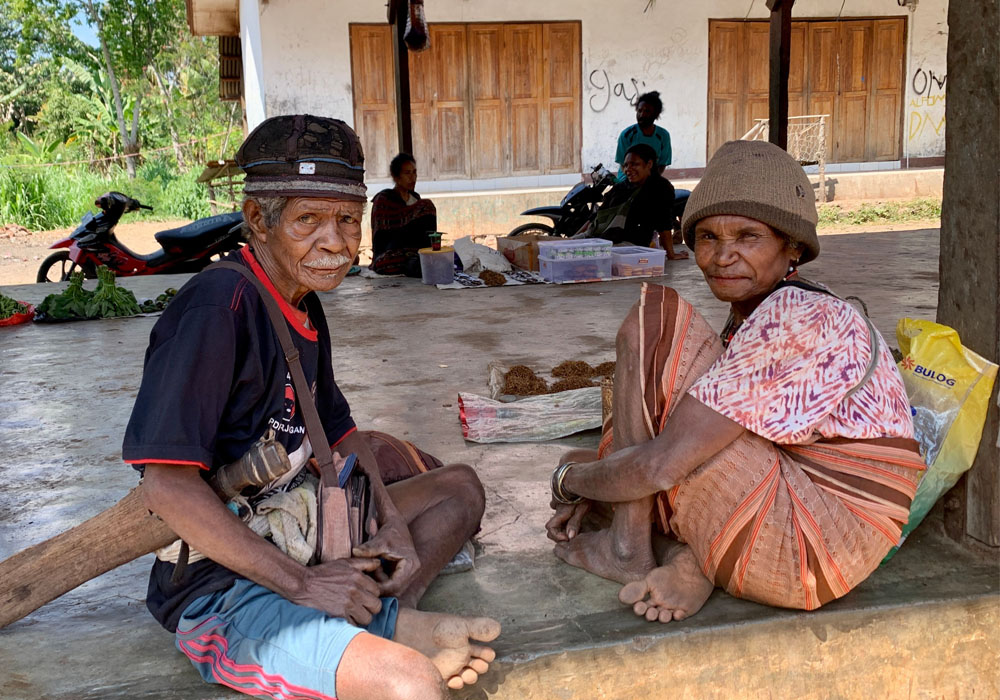
Is Flores worth visiting? My grandfathers used to say that Flores is not an island you simply visit; it is an old soul that visits you.
When you look at a map of Indonesia, our home looks like a long, jagged fire-knife cutting through the Savu and Flores Seas. The Portuguese called us Cabo das Flores—the Cape of Flowers—because of the vibrant coral gardens and the flame trees that bloom like fire along our coastlines. But to us, this island is Nipa, the serpent. It is a land of hidden ridges, smoking volcanic peaks, and deep, ancient valleys where every stone has a name and every wind carries a song.
If you are looking for the manicured resorts of Bali or the neon lights of Jakarta, you will not find them here. Flores is raw. It is beautiful in a way that demands you slow down, open your ears, and listen to the wisdom of the earth.
Let me take you on a journey through my home, the way we live it.
Where the Ancestors Rest in the Clouds: Wae Rebo and Compang
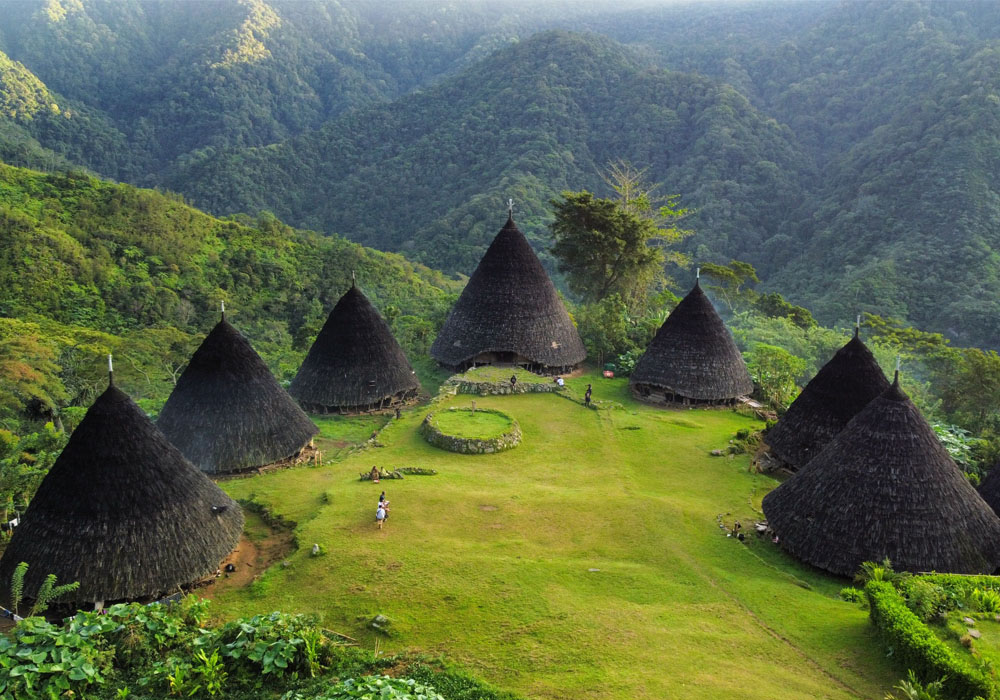
To understand Flores, you must leave the coastline behind and climb into the mist of the Manggarai highlands. Here, tucked away in an amphitheater of emerald mountains, lies Wae Rebo.
In Wae Rebo, we still live in the Mbaru Niang—seven high, cone-shaped thatched houses that look like giant straw hats touching the sky. For us, a house is not just a shelter; it is an ecosystem of faith. The house has five levels. The bottom is for living, the middle levels are for storing food and seeds, and the very top, the Hekang Kode, is reserved for offerings to our ancestors.
In the center of our villages, you will always find the Compang, a sacred stone altar. Our local wisdom teaches us that a village without a Compang is like a body without a soul. It is the umbilical cord that connects us to the Mori Kraeng (the Supreme Ruler) and our ancestors. When we build a house or plant our crops, we ask for permission. We believe that we do not own this land; we are merely borrowing it from those who came before us and those who will come after.
When the morning mist rolls over the thatch roofs and the scent of fresh, hand-pounded Flores coffee fills the cold air, you realize that time doesn’t move in a straight line here. It moves in circles, tethered always to the mountain.
The Sacred Balance of Lodo: The Spider-Web Fields
If you look down from the hills of Cancar, you will see something that looks like magic: giant green spider webs stretched across the valley floor. These are our Lingko—our traditional rice fields.
Our ancestors did not have surveyors or modern blueprints, but they possessed a profound understanding of justice and community. The division of the land is based on a system called Lodo.
When a new field is opened, the village chief (Tua Teno) gathers the community around a central wooden pole. He places his hand on the pole and uses his fingers to measure outward, drawing lines like rays of sun or the threads of a spider’s web. Every family receives a slice of the pie. The size of the slice depends on the family’s size and status, but no one is left without a share.
The spider-web shape ensures that water, flowing from the center outward, is shared equally. It is local wisdom disguised as geometry. It teaches every child in Flores that our survival depends on equity. If your neighbor’s crop fails because you took too much water, the entire village suffers. In a world that often teaches people to take as much as they can, our fields remind us to take only what we need.
The Changing Colors of Kelimutu: The Final Resting Place
Further east, past the winding, spine-chilling roads of Central Flores, the earth opens up to reveal Three Colored Lakes of Mount Kelimutu.
Scientists will tell you that the changing colors of these crater lakes—from turquoise to deep green, liver-red, or midnight black—are caused by volcanic gas reactions and mineral alterations. But if you sit with an elder in Moni over a bowl of steaming Uwi (sweet potato), they will tell you the real truth.
Kelimutu is the place where all souls go when they leave this world.
- Tiwu Ata Mbupu: The lake of the ancestors. It is usually a deep, serene blue or green, where the souls of the old and wise find their eternal rest.
- Tiwu Nuwa Muri Koo Fai: The lake of the young souls. It shifts into vibrant aquamarines and light greens, restless and full of life, housing those who died before their time.
- Tiwu Ata Polo: The enchanted, dark lake. Often a deep red or charcoal black, this is where the souls of those who did wrong are kept.
When the morning sun pierces the fog over Kelimutu, changing the colors of the water right before your eyes, it is a humbling experience. It reminds us that nature is alive, unpredictable, and deeply spiritual. It teaches us to live our lives with integrity, because one day, our souls will have to choose a lake.
The Guardians of the Western Gates: The Komodo
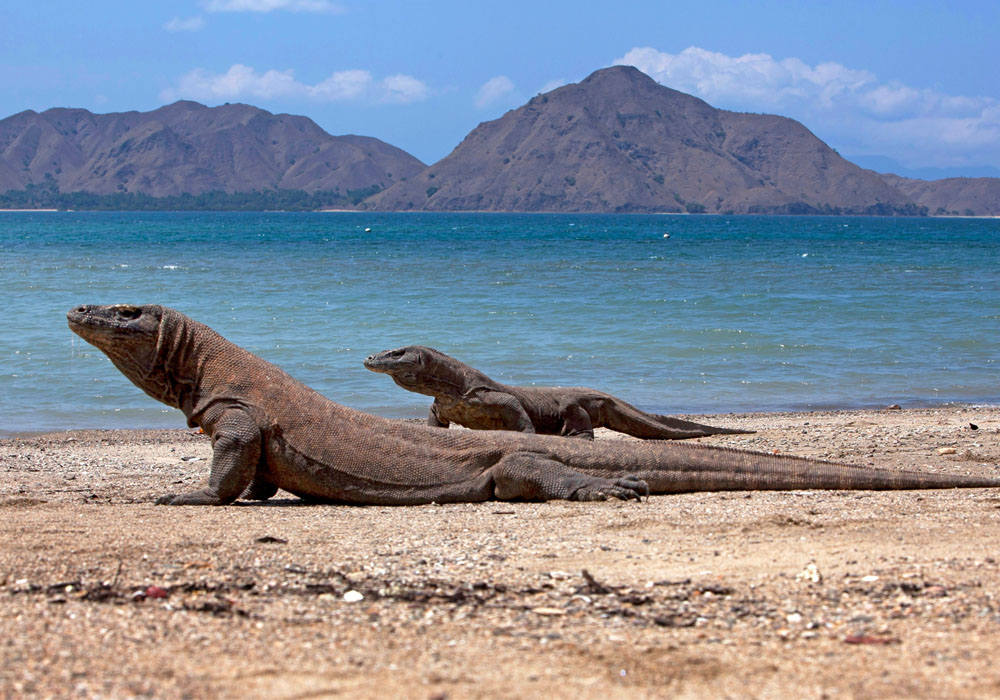
You cannot talk about Flores without talking about our ancient brothers in the west: the Orao, whom the world calls the Komodo Dragon.
Long before Labuan Bajo became a bustling harbor filled with luxury phinisi boats, our people lived side-by-side with these giant reptiles on the islands of Komodo and Rinca. Our local folklore tells the story of the Putri Naga (the Dragon Princess) who married a local man and gave birth to twins: a human boy named Gerong and a female dragon named Orah.
Because they were born from the same womb, the people of the islands view the dragons not as dangerous predators, but as our siblings. We share the same soil, the same shade of the palm trees, and the same deer.
This ancient kinship is the reason why the dragons survived for thousands of years while megafauna elsewhere went extinct. Our traditional wisdom forbade us from harming them. If a dragon entered a village, we didn’t reach for a spear; we spoke to it gently, offered it a share of our catch, and guided it back to the hills. It is a beautiful testament to a time when humans knew how to share an island with monsters, recognizing that the “monster” was just a brother in a different skin.
The Threads of Our Lives: Ikat Weaving
Before you leave Flores, look closely at the sarongs worn by the women in Sikka, Ende, or Ngada. These are our Tenun Ikat.
Every pattern is a story. The geometric lines mimic the ridges of our mountains; the stylized horses represent wealth and journey; the small marine motifs tell of our relationship with the sea. A master weaver does not use a pattern book; the design is carried entirely in her memory, passed down from mother to daughter through whispers and practice.
Dyeing the threads using indigo leaves, turmeric, and roots can take months, sometimes years. It is a slow, meditative process. To us, the Ikat is a second skin. It wraps us when we are born, it is gifted when we marry, and it shrouds us when we return to the earth. It is the ultimate expression of Flores patience.
A Message from the Serpent Island
Flores is a place of deep contrasts. We are predominantly Catholic, yet our lives are completely governed by animist traditions and ancestral respect. We have jagged, harsh mountains, but our hearts are as warm as the tropical waters that surround us.
When you come to Flores, do not just rush to see the dragons or take a photo at Kelimutu. Stay a while. Drink coffee with us. Let the dust of the mountain roads settle on your clothes. Listen to the Gawi dance songs under the moonlight.
We are waiting for you, ready to share the stories that the mountains have been whispering since the beginning of time
Plan Your Flores Adventure
Flores is an experience that stays in your soul long after you’ve left its winding mountain roads and pristine waters. To ensure your journey through the heart of the Serpent Island is both authentic and comfortable, I’ve handpicked these resources for you:
- Find Your Island Sanctuary: From beachfront eco-resorts in Labuan Bajo to cozy mountain homestays near Kelimutu, find your perfect base here: [Affiliate Link: Book your Flores stay on Booking.com] or browse coastal retreats here: [Affiliate Link: Explore Agoda for Flores Accommodations].
- Epic Treks & Cultural Tours: Choosing the right guide is essential for exploring the ancient villages and pristine waters safely and respectfully. Book certified, eco-friendly tours to see the Komodo dragons, trek to Wae Rebo, or cruise the islands here: [Affiliate Link: Discover Flores and Komodo Tours on GetYourGuide].
- Navigating the Trans-Flores Highway: Getting from Labuan Bajo in the west to Maumere in the east is a legendary road trip. For a comfortable private driver or to explore our rugged mountains at your own pace, I recommend: [Affiliate Link: Rent a Car for your Flores Road Trip on DiscoverCars].
By using these links to plan your journey, you are supporting Gindoo.com at no extra cost to you. Your support directly helps us continue protecting, documenting, and sharing the beautiful stories and living traditions of Flores.