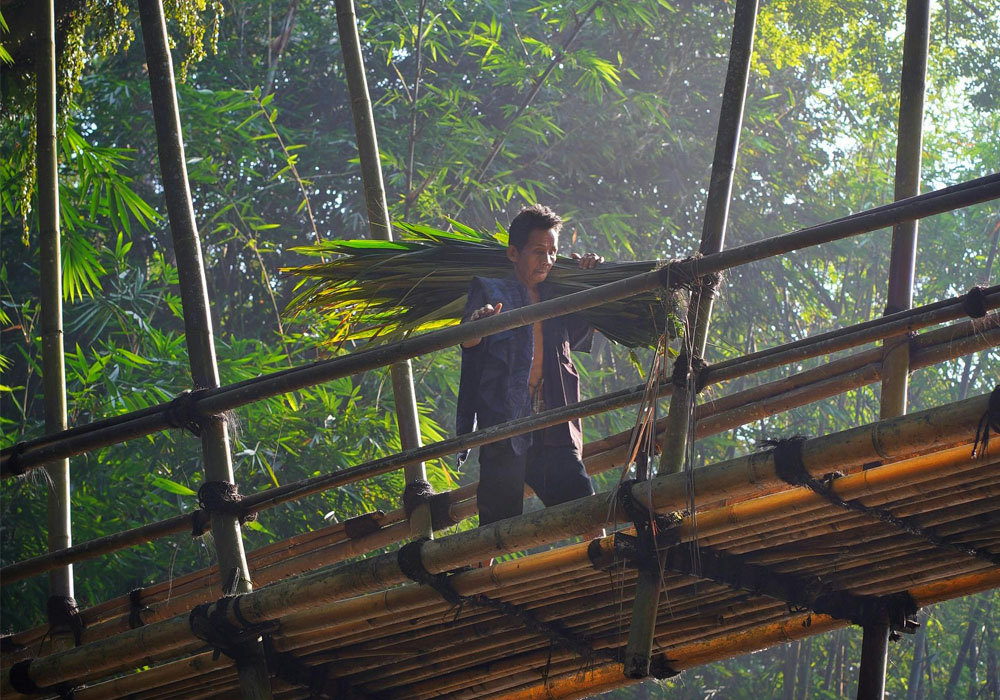
Rote island is the southernmost tip of the Indonesian archipelago, a place where the map ends and the deep blue of the Indian Ocean begins. But for us, this isn’t just a remote island; it is a living sanctuary of tradition, where the “Tree of Life” dictates the rhythm of our days.
When you step off the ferry at the port of Ba’a or land at David Constantijn Saudale Airport, the first thing that hits you isn’t the humidity—it’s the scent. It is a mixture of salt spray from the Savu Sea and the sweet, smoky aroma of burning palm husks.
The Sacred Lontar: More Than Just a Tree
As you drive through the island, you will see them everywhere: tall, slender palms with fan-shaped leaves silhouetted against a piercing blue sky. This is the Lontar palm (Borassus flabellifer), and in Rote, we believe that if you have a Lontar tree, you have a home, a meal, and a future. Our local wisdom teaches us that the tree is a gift from the ancestors.
In the early mornings, you’ll see the men of the village —the Penyadap— climbing these towering palms with nothing but a notched trunk and a prayer. They collect the sweet sap, or Nira, which we boil down into Gula Air (liquid sugar) or ferment into Larue, our traditional palm wine.
To taste fresh Nira in the shade of a Rote hut is to taste the very lifeblood of our island. It is thick, earthy, and carries the energy of the sun. Historically, a family’s wealth was measured by how many Lontar trees they owned. Even today, when you walk through the villages, you are walking through a living economy that has sustained us for centuries.
The Soul of the Sasando
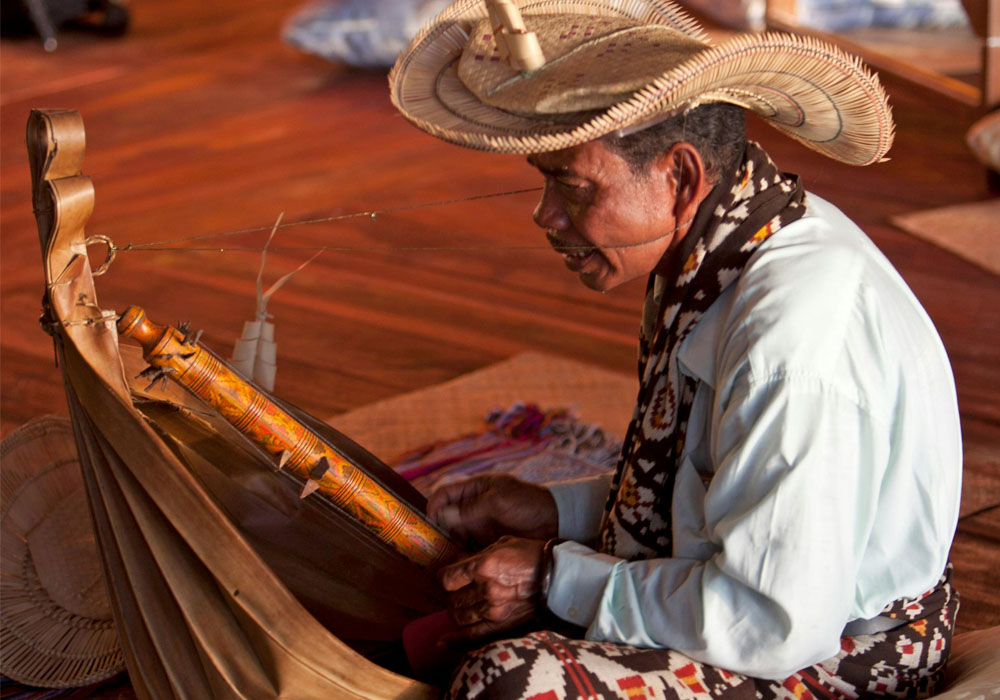
You may have seen the Sasando printed on the IDR 20,000 note, but a picture cannot capture its soul. To hear it played in its birthplace, especially in a village like Oebelo, is a spiritual experience.
The Sasando is a stringed instrument unlike any other in the world, crafted from a bamboo tube and a resonator made of intricately folded Lontar leaves.
When a master plays, the sound sits somewhere between a harp and a sitar—ethereal, shimmering, and haunting. Local elders will tell you that the original seven strings of the Sasando were not chosen by chance; they represent the stages of a baby’s development in the womb.
Every note is a reminder of our connection to birth, life, and the cycles of nature. It is our “voice,” and even in the quietest nights, you can often hear the distant pluck of strings drifting through the palm groves, keeping our history alive.
Hidden Waters and Wandering Rocks
Most travelers arrive with surfboards, headed straight for the legendary “T-Land” break at Nemberala. And while those waves are world-class, the true spirit of Rote’s nature is found in its hidden, silent waters.
Take, for instance, Telaga Nirwana. To reach this emerald lagoon, you must find a local fisherman to guide you in a small sampan through a labyrinth of mangroves.
The water there is so clear it feels like glass, and at low tide, the lagoon reveals itself in the shape of a heart when viewed from the limestone cliffs above. It is a place of deep peace, where the only sound is the occasional splash of a kingfisher.
Further north, the twin monoliths of Batu Termanu stand guard over the coast. According to our legends, these are “wandering rocks” that traveled from across the sea. They were searching for a place to call home, and when they saw the beauty of Rote, they fell in love and rooted themselves forever.
Watching the sun dip behind these giant stones isn’t just a photo opportunity; it’s a moment to connect with the myths that we locals still hold dear.
Weaving the Ancestral Map
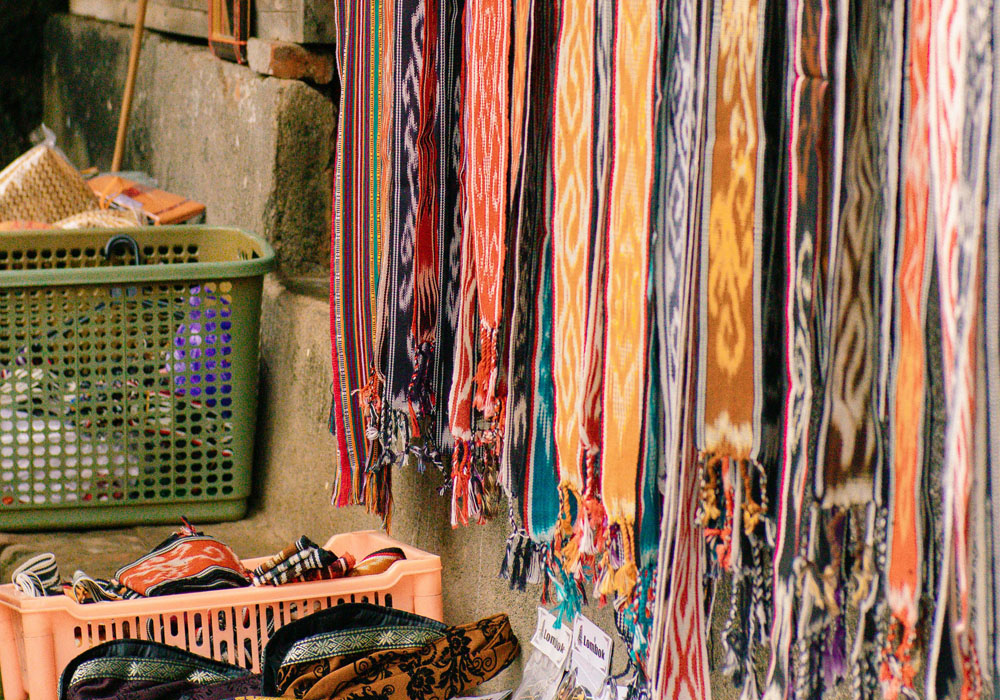
If the Lontar is our body and the Sasando is our voice, then Tenun Ikat is our memory. In villages like Namodale, you can still hear the rhythmic clack-clack of the backstrap looms. Our weaving is a slow, meditative process.
A single sarong can take three to six months to complete, using natural dyes made from the roots of the Noni tree and the leaves of the Indigo plant.
Each pattern is an “Ikat,” which means “to tie.” Before weaving, the threads are tied and dyed to create complex patterns that tell the story of a specific clan, their relationship with the sea, or the stars that guide our fishermen.
When you wear a piece of Rote Ikat, you aren’t just wearing fabric; you are wearing a map of our ancestors. It is a tradition passed from mother to daughter, a silent language that binds our community together across generations.
The Labyrinth of Mulut Seribu
For those willing to venture to the northeastern tip of the island, there is Mulut Seribu, or “A Thousand Mouths.” This is a vast, quiet labyrinth of tiny islands, hidden bays, and limestone caves. It is our version of Raja Ampat, but without the crowds or the commercialism.
Navigating these “mouths” requires a local captain who knows the tides and the secrets of the caves. It is a place where you can truly get lost in the majesty of nature.
The Slow Rhythm of Rote Island
Life in Rote island is dictated by the sun and the tides. We are a people of deep faith and community. You will notice that on Sundays, the island falls into a beautiful, respectful silence as families head to church. Our local wisdom, known as Maneleo, emphasizes the importance of community sharing. Whether it’s a harvest or a wedding, no one eats until everyone is seated.
As a visitor, the best way to respect our home is to embrace this slowness. Don’t rush from beach to beach. Sit in a warung, share a cup of coffee, and ask about the stories of the rocks and the trees. You will find that the people of Rote are among the most welcoming in Indonesia—not as “tourist hosts,” but as neighbors welcoming you to the end of the world.
Planning Your Journey to the Southernmost Tip
Rote is a place that rewards the patient traveler. While it is becoming easier to reach, it remains a destination for those who seek authenticity over luxury.
To help you plan your journey while supporting the local community and the stories we share here on Gindoo.com, I’ve handpicked a few partners that align with our island’s spirit.
- Where to Stay: For those who want to be close to the heartbeat of the surf while staying in harmony with nature, check out these [Book your accommodation through Booking.com]. These stays focus on sustainability and employ local village staff.
- Getting Around: The best way to see the “wandering rocks” and hidden lagoons is by motorbike. You can find reliable rentals and guided local tours through [Book your Rote Island Transportation & Tours using GetYourGuide platform].
- Travel Essentials: Because Rote is remote, having the right gear is essential. From reef-safe sunscreen to the best travel insurance for island hopping, find my recommendations here: [Get your travel insurance using VisitorsCoverage].
By booking through these links, with NO cost on you, you’re not just planning a trip—you’re helping me continue to document the culture and wisdom of our beautiful East Nusa Tenggara.