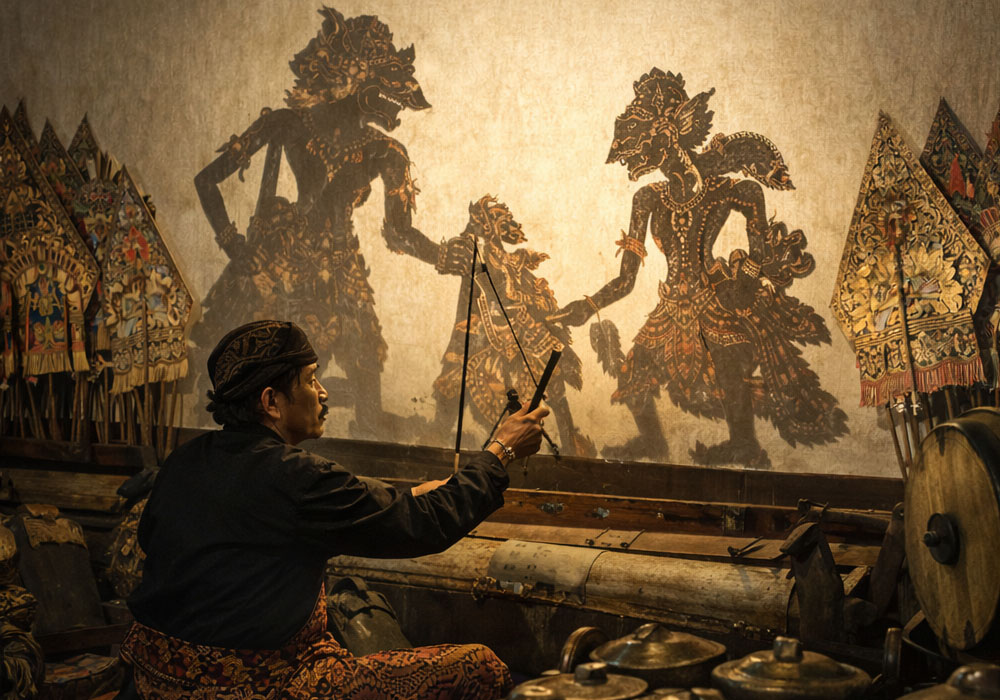
The magic of Wayang Kulit is in the vibration of the gong and the dance of the shadows. It is a slow-burn art form that asks you to sit still, breathe, and remember that life is often just a play of light and shadow.
I am sitting on a weathered bamboo mat in a small pendopo (open-air pavilion) just south of the Yogyakarta Kraton. The air is thick with the sweet, clove-scented smoke of kretek cigarettes and the heavy fragrance of jasmine offerings. It is nearly midnight, yet the city is far from asleep. Before me hangs a taut white linen screen, illuminated from behind by the warm, flickering glow of a blencong—a traditional oil lamp shaped like a mythical bird.
Tonight, the shadows are coming to life.
The Master of the Universe: The Dalang
At the center of this spiritual theater sits the Dalang. He is more than just a puppeteer; he is a conductor, a storyteller, a philosopher, and a priest all rolled into one. For nine hours straight, without a single break for water or rest, he will manipulate hundreds of intricate leather puppets, provide a unique voice for every character, and lead the sixty-piece Gamelan orchestra with rhythmic knocks of a wooden mallet held between his toes.
As the bronze gongs of the Gamelan begin to shimmer and swell, the Dalang pulls the Gunungan—the leaf-shaped “Mountain of Life”—from the center of the screen. The performance has begun.
From Buffalo Hide to Fine Art
The term Wayang Kulit translates literally to “shadows from skin.” These puppets are masterpieces of patience. They are hand-carved from water buffalo hide, perforated with thousands of tiny holes using fine chisels to create the illusion of lace and jewelry when the light shines through them.
While the audience on one side of the screen sees only the black-and-white silhouettes, those sitting behind the Dalang see a riot of color—gold leaf, deep vermillion, and royal blues. In Yogyakarta style, the puppets are known for their elegant, elongated limbs and the specific “prolonged” tilt of their heads, which signifies their emotional state and social standing.
Ancient Epics and Local Wisdom
The stories performed in Yogyakarta are usually drawn from the Hindu epics: the Ramayana and the Mahabharata. However, they have been deeply “Javanized” over a thousand years.
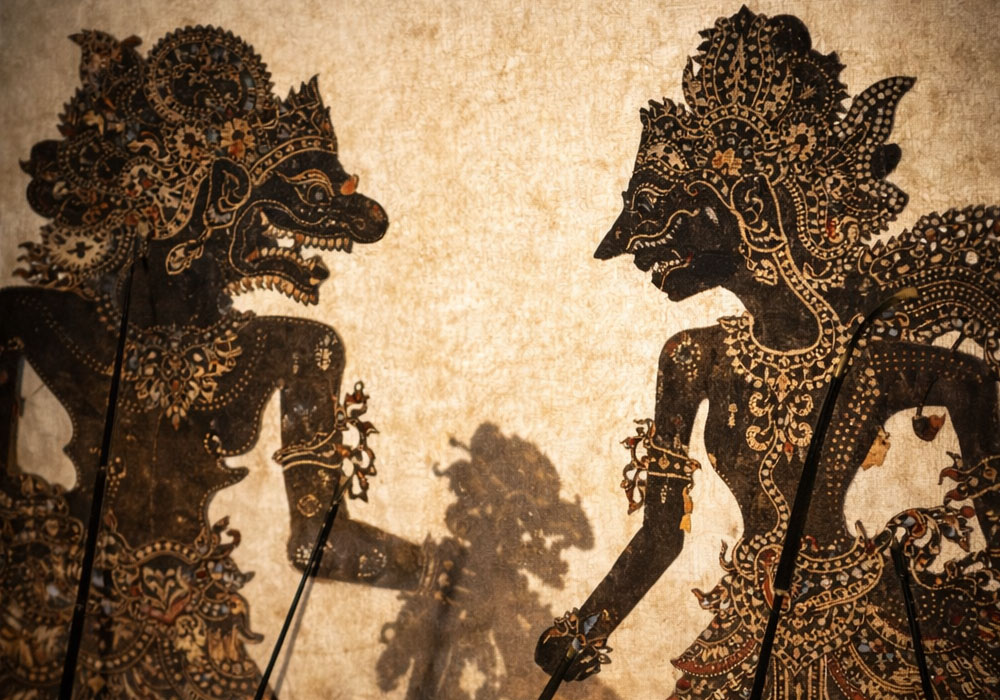
Central to every performance is the appearance of the Punakawan, or the clown servants: Semar, Petruk, Gareng, and Bagong. This is where the local wisdom truly shines. While the kings and gods speak in high, poetic Kawi language about destiny and war, the clowns break the “fourth wall” to speak in modern Javanese.
Through the mouths of these clowns, the Dalang delivers sharp social commentary, jokes about the local economy, and moral lessons. They represent the voice of the common people—reminding us that even in a world of epic battles and divine interventions, humility, laughter, and common sense are the ultimate virtues.
The Symbolism of the Screen
In Yogyakarta’s mystical tradition, the Wayang performance is a metaphor for human existence.
- The Screen (Kelir): Represents the physical universe.
- The Lamp (Blencong): Represents the light of the soul or the sun.
- The Puppets: Represent the various passions and characters within a human being.
- The Dalang: Represents the Divine Creator, moving the strings of fate.
Watching the shadows flicker, you realize that the battle between the Pandawas (the heroes) and the Kurawas (the villains) isn’t just an ancient story; it is the battle happening inside every person’s heart between their higher and lower selves.
How to Experience Wayang Kulit in Yogyakarta
If you want to witness this UNESCO-recognized Masterpiece of Oral and Intangible Heritage, Yogyakarta is the undisputed soul of the craft.
- Where to Watch: * Sonobudoyo Museum: They hold shortened, 2-hour performances perfect for tourists every evening (except Mondays) near the North Square (Alun-Alun Utara).
- The Kraton (Sultan’s Palace): Occasional performances are held here in the mornings, though they are more formal.
- Village Wayang: For the true experience, look for posters in villages outside the city. These are the “all-night” marathons that go from 9:00 PM until 4:00 AM.
- Admission: Tickets at the Sonobudoyo Museum are approximately IDR 50,000 to 100,000. Village performances are usually free to the public, as they are sponsored by a host for a wedding or birth.
- Best Time: The dry season (May to September) is best, as many performances are held in open pavilions that can be drafty or damp during the monsoon.