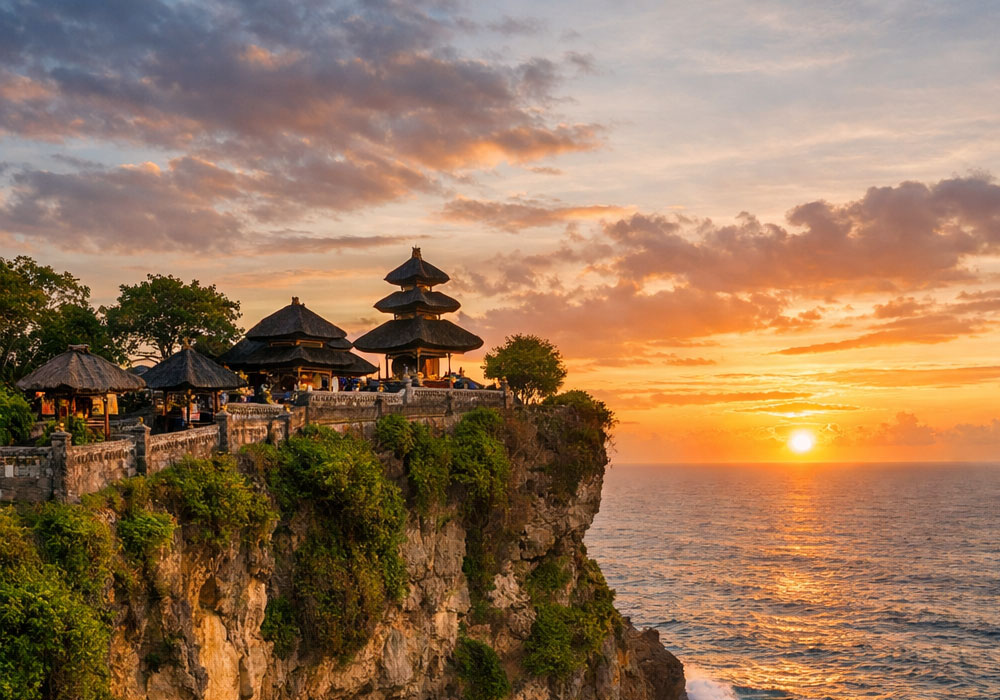
I am visiting Uluwatu Temple in the early evening, walking along a narrow stone path that clings to the very lip of a limestone precipice. To my left, the sheer white cliffs of Bali’s southern peninsula drop seventy meters straight into the churning Indian Ocean. Below, the water is a deep, bruised purple, breaking into white foam against the jagged rocks with a roar that vibrates through the soles of my feet.
This is Pura Luhur Uluwatu. In the ancient Balinese language, Ulu means “top” or “tip,” and Watu means “rock.” It is a name that offers no exaggeration; standing here, you feel as though you have reached the literal end of the world.
The Architect of the Sea
The history of Uluwatu Temple is intertwined with the lives of two of Bali’s most revered holy men. While the temple’s foundations date back to the 11th century, established by the monk Empu Kuturan, it was the 16th – century seafaring priest, Dang Hyang Nirartha, who gave the temple its current spiritual significance.
Nirartha traveled across Bali, establishing “sea temples” to protect the island from dark forces coming from the ocean. Legend says that Uluwatu was his final stop. It was here that he achieved Moksa — the ultimate liberation from the cycle of rebirth — leaving his physical body behind to unite with the divine. Today, the small three-tiered meru (pagoda) at the very point of the cliff is dedicated to him, a silent sentinel watching over the mariners and fishermen far below.
The Dance of Fire and Spirit: Kecak
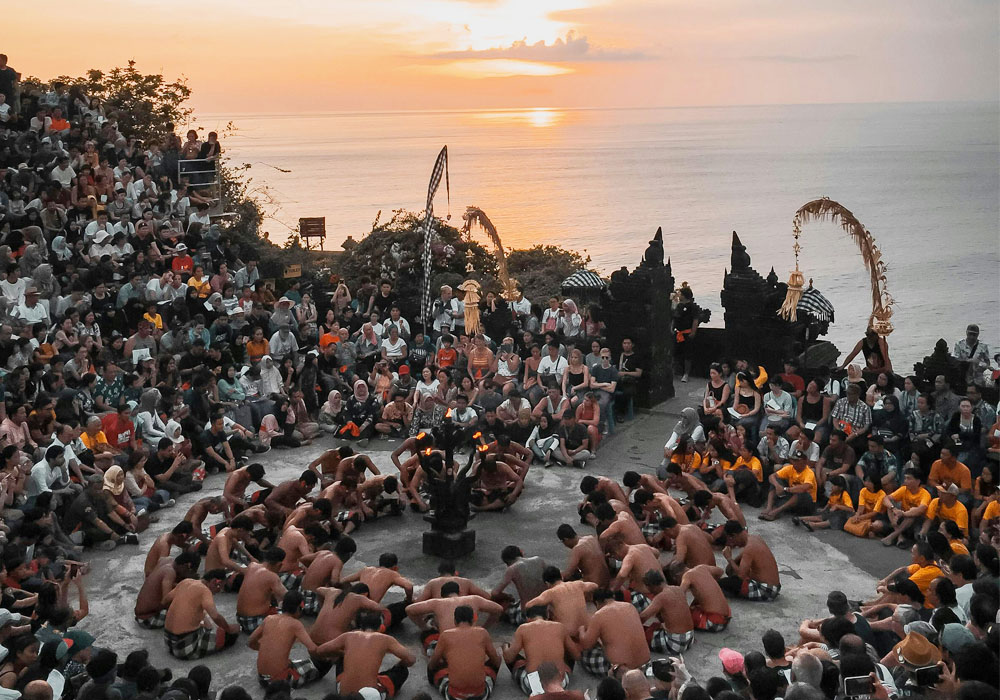
As the sky begins to turn a bruised orange, I make my way to the open – air amphitheater. There are no instruments here — no gongs, no flutes, no drums. Instead, the “orchestra” is made of seventy bare-chested men sitting in concentric circles.
This is the Kecak Fire Dance. As the sun dips below the horizon, the men begin a rhythmic chant: “Chak-chak-chak-chak.” The sound rises and falls like the waves hitting the cliffs below. They tell the story of the Ramayana — of Prince Rama, the beautiful Sita, and the monkey general Hanuman.
By the time darkness falls, a giant pile of coconut husks is set ablaze in the center of the circle. Hanuman leaps through the flames, kicking the embers into the air in a spectacular display of trance and bravery. It is a sensory overload: the smell of woodsmoke, the haunting vocal percussion, and the silhouettes of dancers against the moonlight.
Local Wisdom: The Guardians of the Gate
You cannot walk the paths of Uluwatu Temple without encountering its most famous — and mischievous — residents: the long-tailed macaques. To the Balinese, these monkeys are not just animals; they are the Wanara, the guardians of the temple.
There is a local wisdom here regarding coexistence. The Balinese believe that these monkeys protect the temple from evil influences. However, they also serve as a humble reminder to visitors about the nature of desire and attachment. If you hold onto your sunglasses or your camera too tightly (or too loosely), the monkeys will snatch them away. It is a playful, if frustrating, lesson in the Balinese philosophy of Aparigraha — non-attachment to material things.
BOOK YOUR KECAK DANCE SEAT OR EXPLORE ULUWATU
Planning Your Pilgrimage to the Cliff of Uluwatu Temple
To see Uluwatu in its best light, follow these practical steps:
- How to Get There: Uluwatu is located in the Pecatu sub-district, about an hour’s drive from Kuta or Seminyak, and roughly 45 minutes from the airport. The roads are winding and can get congested, so hiring a driver for the afternoon is highly recommended.
- Entry Fees and Costs: * Temple Entrance: Approx. IDR 50,000 for adults.
- Kecak Dance Ticket: Approx. IDR 150,000. These often sell out, so it is best to buy them online or arrive at the ticket booth by 4:30 PM.
- Best Time to Visit: Arrive around 5:00 PM. This gives you enough time to walk the scenic cliff-side paths and take photos before the Kecak dance starts at 6:00 PM, perfectly timed with the sunset.
A Final Word
As the fire dies down and the crowds begin to disperse, the roar of the ocean takes over once again. Uluwatu is a place of balance—the solid, unmoving rock against the ever-changing sea; the ancient silence of the temple against the rhythmic shouting of the dancers. It reminds us that even when we are standing on the edge, there is a profound beauty in the drop.