Tirta Gangga is a place where you can literally walk on water. It is a testament to the fact that even when nature destroys something beautiful, human devotion can bring it back even stronger.
I am visiting the water palace in the early morning, just as the first light of the sun touches the summit of Mount Agung in the distance. The air here in the eastern highlands of Karangasem is crisp and cool, a refreshing change from the humid warmth of the coast.
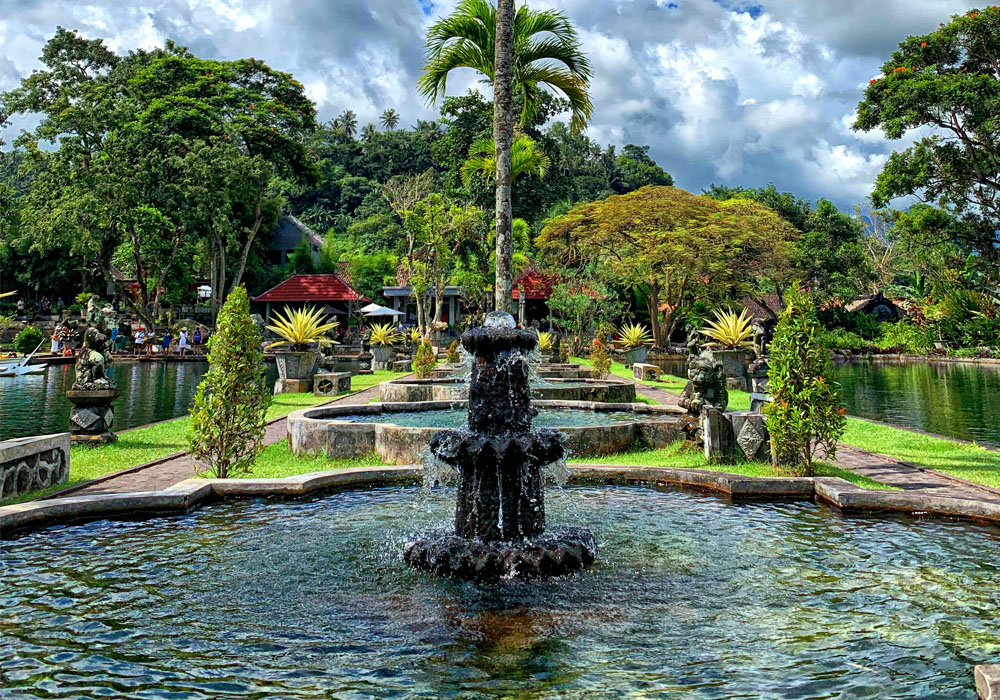
Before me, the water in the expansive pools is so still it looks like a sheet of dark glass, perfectly reflecting the ornate stone statues and the towering, eleven-tiered lotus fountain that sits at the center of the gardens.
As I step onto the hexagonal stone pathways that seem to float on the surface of the water, a school of massive, golden koi fish begins to follow my shadow. Their scales shimmer like submerged coins, and the only sound is the gentle, constant trickle of water flowing from the mouths of stone guardians.
The Last Raja’s Dream
Tirta Gangga is a relatively modern masterpiece compared to the ancient temples of Bali, but its history is deeply royal. It was built in 1946 by the last King of Karangasem, Anak Agung Anglurah Ketut Karangasem.
The King was a true visionary—a man who loved architecture and spent much of his time personally designing gardens that blended Balinese and Chinese styles.
He didn’t just command the palace to be built; he was often seen working alongside the laborers, digging in the mud and placing the stones with his own hands. However, the palace faced a great tragedy in 1963 when Mount Agung erupted.
The gardens were almost entirely destroyed by volcanic ash and tremors. What we see today is a labor of love—a meticulous restoration led by the royal family and the local community to bring the King’s dream back to life from the ashes.
Local Wisdom: The Water of the Ganges
The name itself, Tirta Gangga, carries a profound meaning: “Tirta” means blessed water, and “Gangga” refers to the holy River Ganges in India. This is not just a palace for relaxation; it is a sacred site. The water that fills these pools flows from a natural spring located beneath a large Banyan tree at the highest level of the grounds.
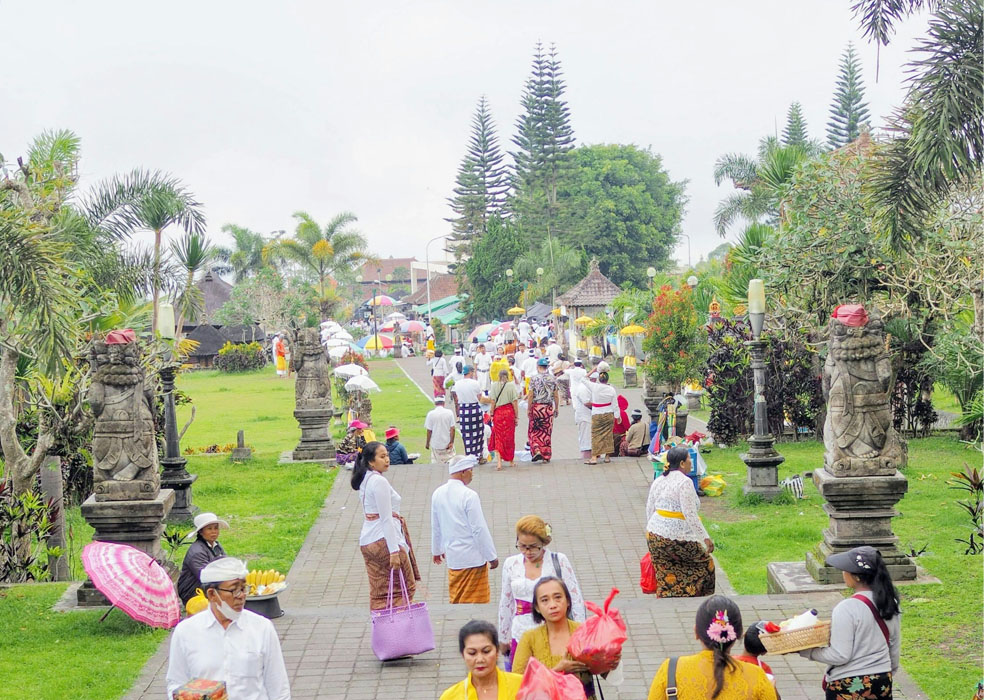
The local wisdom here is rooted in the Balinese concept of Tri Hita Karana—the harmony between humans, nature, and the divine. The spring water is considered Suci (holy) and is used by the surrounding villages for religious ceremonies and for the Subak irrigation system that nourishes the nearby rice terraces. The layout of the gardens represents the Balinese universe:
- The Upper Tier: Represents the realm of the Gods (Swah), where the holy spring originates.
- The Middle Tier: Represents the human realm (Bwah), where we walk among the fountains and fish.
- The Lower Tier: Represents the underworld (Bhur), where the water eventually flows out to feed the earth.
Stepping Stones and Silent Guardians
One of the most iconic experiences at Tirta Gangga is walking across the maze of stepping stones in the main pool. Each stone is carved with intricate patterns, and as you walk, you are flanked by stone statues of demons and heroes from the Mahabharata.
There is a strange, meditative peace in focusing on your balance while the koi fish swirl around your feet. It is a reminder of the Balinese belief in “Selective Focus”—that even in a world full of distractions (and hungry fish!), one must maintain a steady path and a clear heart to reach the other side.
Planning Your Visit to the Water Palace
For you who want to capture the magic of Karangasem, here is the essential information for 2026:
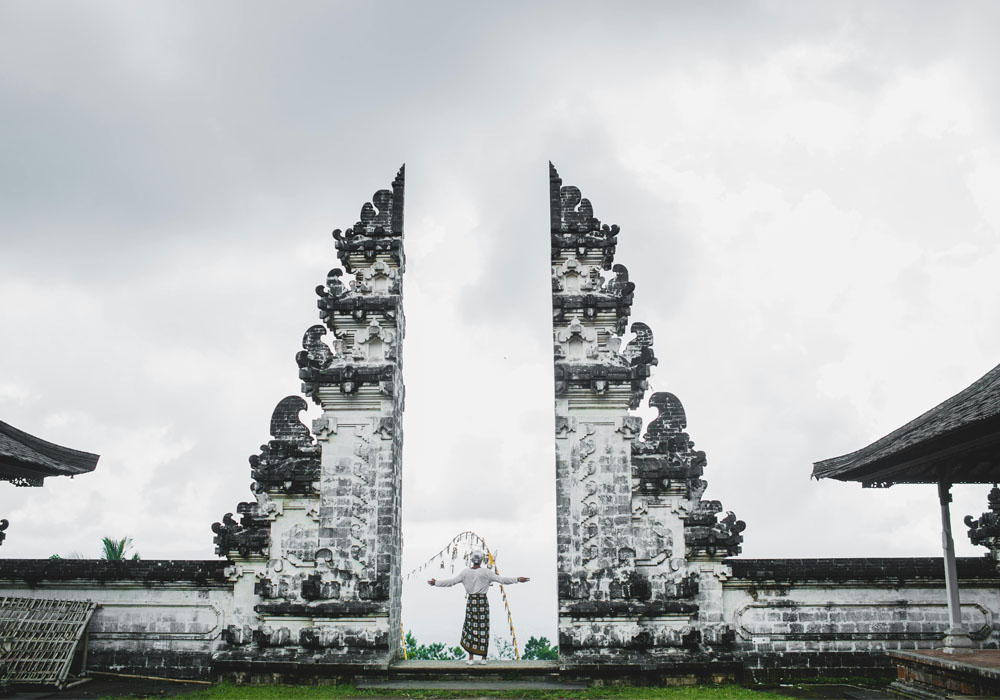
- How to Get There: Tirta Gangga is located in Ababi village, Karangasem. From Ubud, it is about a 2-hour drive east. Many travelers combine this with a visit to the “Gates of Heaven” at Lempuyang Temple, which is only 20 minutes away.
- Entrance Fees: As of early 2026, the entrance fee for international tourists is IDR 90,000 for adults and IDR 45,000 for children. If you want to swim in the public royal pool (which is incredibly refreshing), there is an additional fee of approximately IDR 20,000.
- Best Time to Visit: 7:00 AM to 8:30 AM. The palace is one of the most photographed spots in Bali. By 9:30 AM, the stepping stones can become very crowded. Arriving early ensures you get that “floating on water” photo without a dozen people in the background.
- Pro-Tip: Buy a small bag of fish food from the vendors outside the gate (usually IDR 5,000). The koi are very friendly and will swarm toward you, making for incredible photos and a fun experience.
- Need a Private Driver or Tour Guide to Explore Tirta Gangga/Karangasem? Book a vetted [Private Driver via GetYourGuide].
Tirta Gangga is a place where you can literally walk on water. It is a testament to the fact that even when nature destroys something beautiful, human devotion can bring it back even stronger.