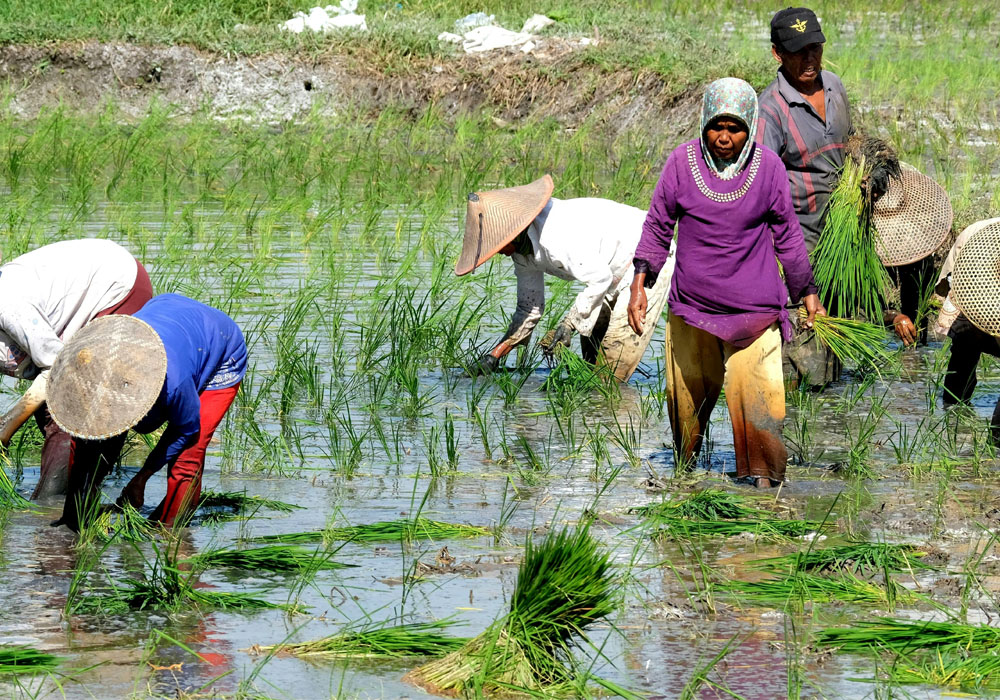
Sidemen village is the antidote to the modern world. It is a place that asks you to put down your phone and pick up a conversation with a farmer, or simply sit and watch the light change on the emerald fields.
I am visiting the valley in the early morning, standing on a narrow dirt path that separates two shimmering tiers of rice paddies. The air here in East Bali is crisp and cool, far removed from the humid bustle of the southern coast.
To my west, the massive, jagged silhouette of Mount Agung—the holiest peak on the island—rises like a silent sentinel, its crater often wreathed in a halo of white mist.
In Sidemen, the world feels like a painting that hasn’t quite dried yet. The only sounds are the rhythmic thwack of a farmer’s scythe, the distant call of a rooster, and the constant, musical gurgle of the Subak irrigation channels that carry the mountain’s lifeblood to the fields below.
The Land of “Great Achievement”
The name “Sidemen” (pronounced See-de-men) is whispered to have come from the words Sida, meaning “to attain,” and Mahan, meaning “greatness.” Historically, this valley was the cradle of spiritual learning and sacred rituals.
For centuries, it served as a favored training ground for priests and ascetics who were drawn to the area’s potent energy and its physical proximity to Mount Agung.
While the Majapahit Empire eventually extended its influence here via the Gelgel Kingdom in the 18th century, Sidemen has always maintained a reputation as a “Holy Land.” It is home to a disproportionate number of high priests (Brahmana) and traditional healers (Balian).
Walking through the village of Tabola, you aren’t just walking through a tourist destination; you are walking through a living sanctuary that has guarded Bali’s most sacred agricultural and spiritual traditions for over a thousand years.
The Sacred Thread
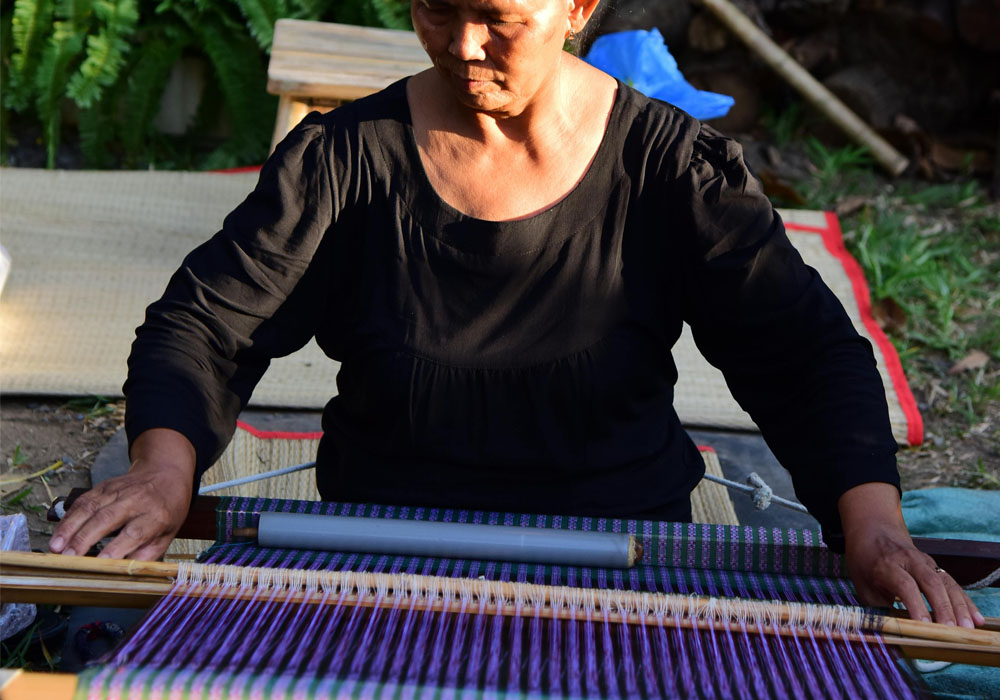
If you listen closely while walking past the traditional homes, you will hear a rhythmic clack-clack-clack. This is the sound of the Tenun Endek and Songket looms. Sidemen is one of the last strongholds of traditional Balinese weaving.
To the women of Sidemen, weaving is a form of meditation. The intricate patterns are not merely decorative; they are symbolic maps of protection and fertility.
There is a deep belief that the weaver’s state of mind enters the cloth. If she is angry, the thread will break; if she is at peace, the fabric will be strong and hold its “power.”
This artisanal mastery teaches us the value of Patience—reminding us that anything of true worth takes time, precision, and a quiet spirit to create.
Life in the Shadow of the Volcano
The people of Sidemen live in a constant dialogue with Mount Agung. They view the volcano not as a threat, but as the cosmic pillar connecting the divine realm with the earthly world.
Their daily lives are a practice of Tri Hita Karana—maintaining harmony with the gods, with each other, and with the environment.
When the mountain rumbles, the villagers don’t just see a geological event; they see a spiritual message. This deep connection to the land means that Sidemen remains one of the most authentic pockets of Bali. Here, tourism is a guest in the house of tradition, not the master of it.
Planning Your Retreat to the Valley
For you who want to experience “Bali with the volume turned down,” here is the practical guide for Sidemen village:
- How to Get There: Sidemen is located in the Karangasem Regency, about 90 minutes northeast of Ubud. The drive is spectacular, winding through traditional villages and steep hills.
- Entrance Fees: There is No Fee to enter the village area. However, if you explore the rice terraces or hidden waterfalls like Gembleng Waterfall, a small community donation of IDR 10,000 to 25,000 is customary.
- Best Time to Visit: April to October (Dry Season). For the best views of Mount Agung, you must be awake by 6:00 AM. By 10:00 AM, the mountain often hides behind a curtain of clouds.
- Must-Do Activity: Take a guided rice paddy trek. Not only will you learn about the Subak system, but walking the paths helps compact the soil, which local farmers appreciate as it strengthens the terrace walls!
Stay & Discover Sidemen
Sidemen is best experienced by staying a few nights to truly soak in the morning mist and the slow pace of village life. Use the links below to find your sanctuary:
- Find Your Dream Bamboo Villa or Eco-Stay in Sidemen on Booking.com – Discover hidden gems overlooking the rice terraces and Mount Agung.
- Book a Traditional Weaving Workshop or Guided Trek on GetYourGuide – Connect with local artisans and explore the valley’s hidden spiritual sites.
Sidemen is the antidote to the modern world. It is a place that asks you to put down your phone and pick up a conversation with a farmer, or simply sit and watch the light change on the emerald fields.