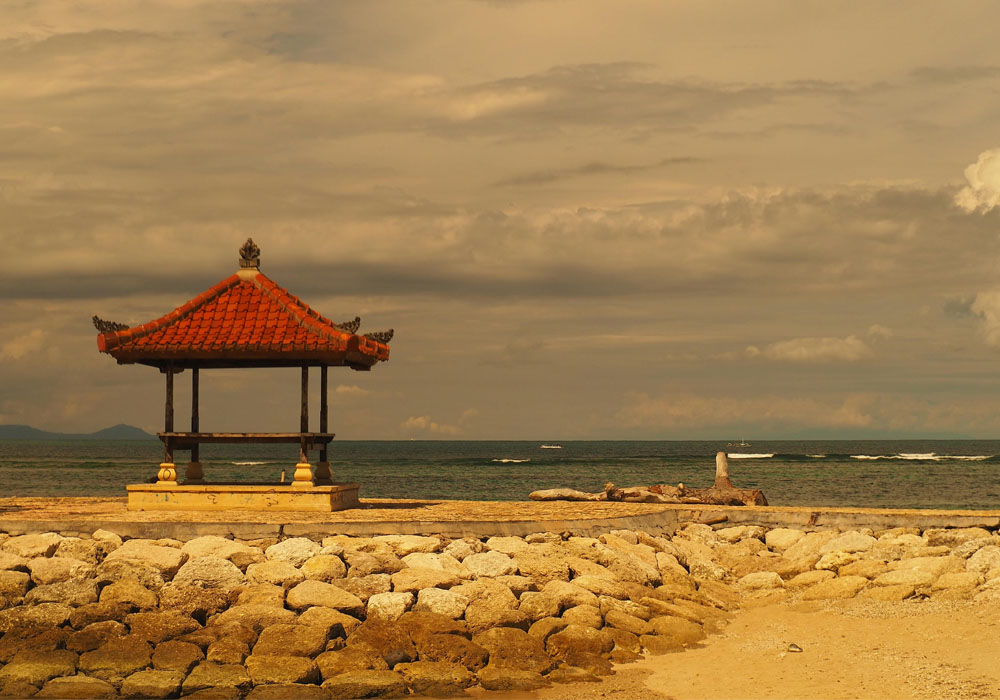
Sanur is where Bali goes to breathe. It is the perfect balance between the traditional and the modern, the sacred and the social. While other parts of Bali are trying to find the “next big thing,” Sanur is content being exactly what it has always been: a sanctuary for the morning sun.
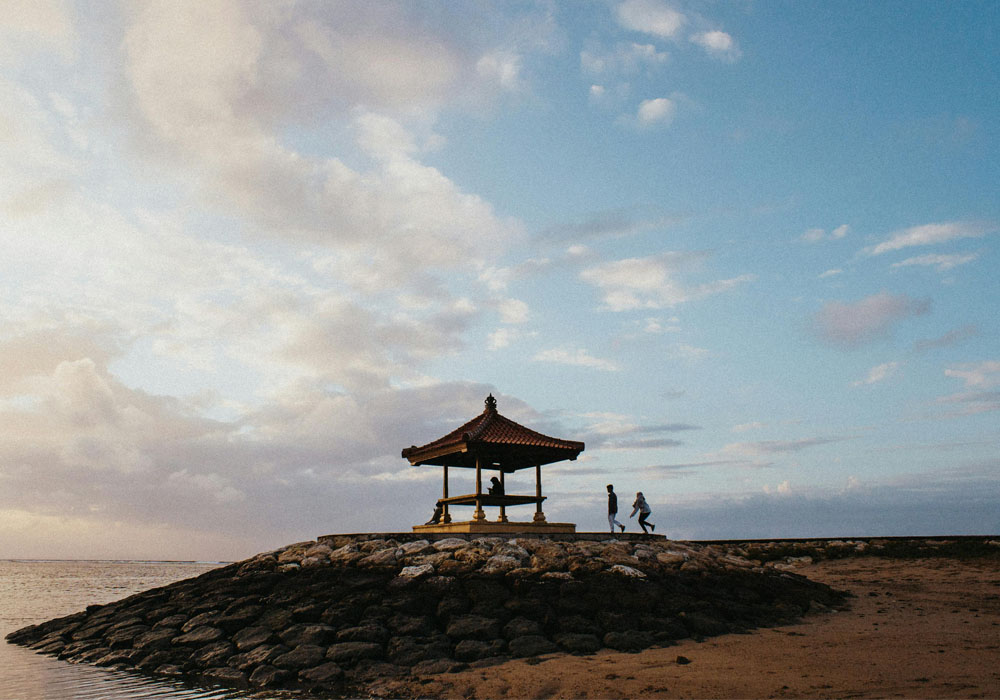
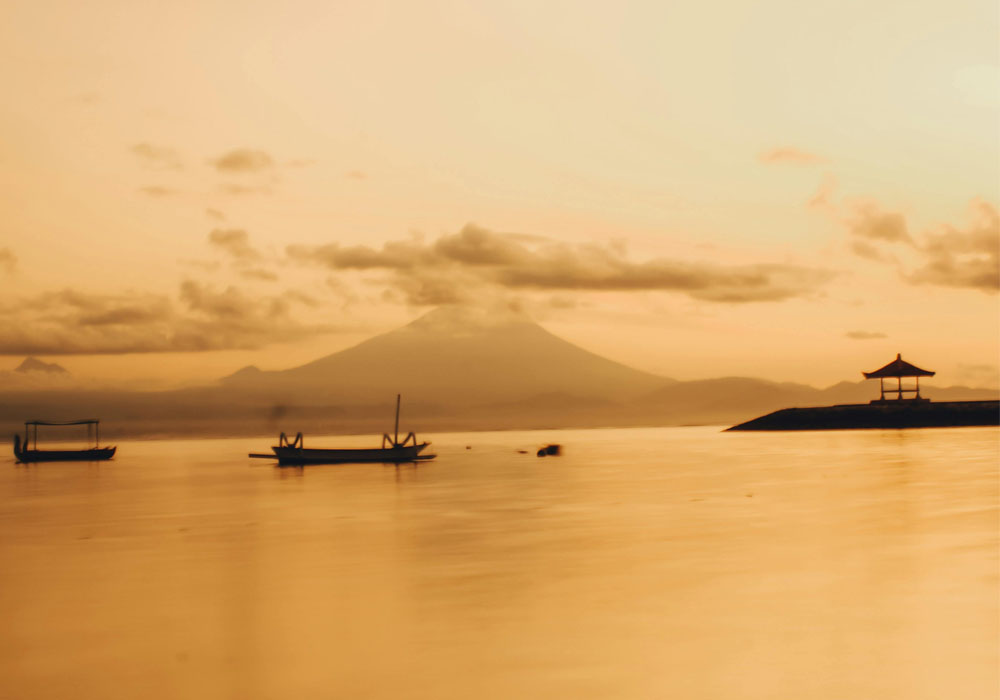
I am visiting the boardwalk in the early morning, just as the first sliver of gold breaks the horizon over the silhouette of Nusa Penida. In Sanur, the day doesn’t start with a roar; it begins with a whisper. While the west coast of Bali is famous for its fiery sunsets and crashing surf, Sanur is the guardian of the sunrise.
The water here is as still as a lake, protected by a massive reef that creates a turquoise lagoon where traditional jukung boats—painted in vibrant reds, yellows, and blues—float like silent sea birds.
Walking the five-kilometer paved coastal path, I pass elderly locals practicing Tai Chi and fishermen standing waist-deep in the glassy water. There is a sense of “Old Bali” here, a dignified pace that refuses to be rushed by the modern world.
The Village of the High Priests
Sanur holds a prestigious place in the spiritual hierarchy of the island. Historically, it was known as a village of the Brahmana (the priestly caste) and was a center for profound spiritual power. In the 10th century, the first recorded history of a king in Bali was inscribed on the Belanjong Pillar, which sits quietly in a small shrine just off the main road.
This pillar, dating back to 914 AD, is written in both Sanskrit and Old Balinese, marking the arrival of the Sri Kesari Warmadewa dynasty. It is the birth certificate of Balinese civilization. For centuries, Sanur was also whispered about as a place of “Black and White Magic,” where the veil between the physical and spirit worlds was particularly thin.
This legacy has evolved into a community that is deeply protective of its traditions, ensuring that even as luxury resorts rise, the temple ceremonies remain the true heartbeat of the village.
The Calm of “Mebakti”
The local wisdom of Sanur is centered around the concept of Balance and Stillness. Because the waves are broken by the reef far offshore, the shore itself is a place of safety and reflection. The locals believe that the morning sun carries the purest Prana (life force).
There is a philosophy here of “Mebakti”—the act of devotion through daily life. You see it in the way the hotel gardeners place their offerings on the sand before starting work, or in the way the “Morning Market” (Pasar Sindhu) operates with a quiet, respectful hum rather than the aggressive bartering found elsewhere. Sanur teaches us that power does not always have to be loud. Like the tide that creeps in almost invisibly, true strength is found in consistency and calm.
The Festival of the Wind
If you look up during the dry season, the sky above Sanur is rarely empty. This is the home of the Bali Kite Festival. Giant kites, some spanning ten meters in length and shaped like traditional fish (Bebean) or birds (Janggan), are flown by teams of dozens of men.
To the people of Sanur, kite flying is not a hobby; it is a message to the heavens. It is a way to thank the gods for the harvest and to ask for a prosperous season. The hum of the guwangan (a vibrating bow attached to the kite) creates a haunting, melodic drone that fills the air—a sound that, to any Balinese person, means “home.”
A Guide to the Golden Coast
For you who prefer a “slow travel” experience, here are the essentials for Sanur:
- How to Get There: Sanur is located on the southeast coast, about 25 minutes from the airport via the Mandara Toll Road. It is the main gateway for fast boats to Nusa Lembongan and Nusa Penida.
- Entrance Fees: Like Kuta, the beach access is Free. Parking your scooter along the beach access roads (like Pantai Sindhu or Pantai Mertasari) costs around IDR 2,000.
- The Best Time to Visit: 5:45 AM. You must see the sunrise at least once. For food, the Sindhu Night Market opens at 6:00 PM and offers some of the best and most affordable Nasi Goreng and Sate Ayam on the island (approx. IDR 20,000 to 30,000 per plate).
- The Boardwalk: Sanur has one of the only long-distance paved boardwalks in Bali. Rent a “cruiser bike” for about IDR 30,000 for the morning and pedal the entire length of the coast.
Sanur is where Bali goes to breathe. It is the perfect balance between the traditional and the modern, the sacred and the social. While other parts of Bali are trying to find the “next big thing,” Sanur is content being exactly what it has always been: a sanctuary for the morning sun.