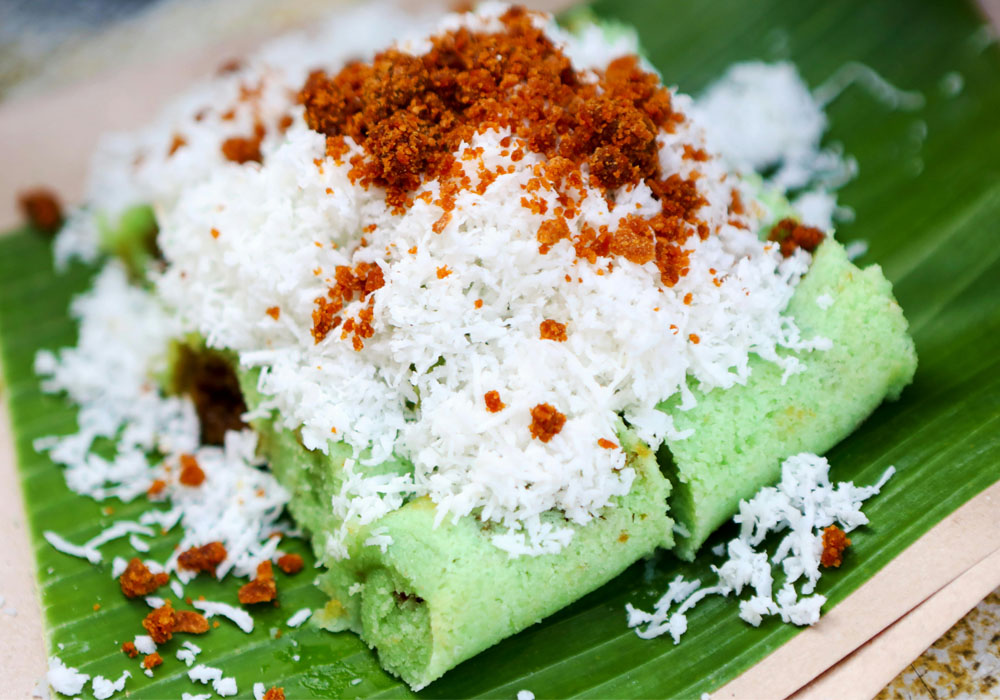
The high-pitched, haunting whistle of a Putu Cake – Kue Putu cart is the unofficial soundtrack of an Indonesian evening. It’s a sound that cuts through the humid air and the roar of motorbikes, a siren song that tells you the “Uncle” with the wooden cart has arrived.
For us locals, that whistle isn’t just noise; it’s a pavlovian trigger. We don’t just hear it—we smell the pandan and taste the melting palm sugar before we even leave our front doors.
The Mystery of the Whistling Box
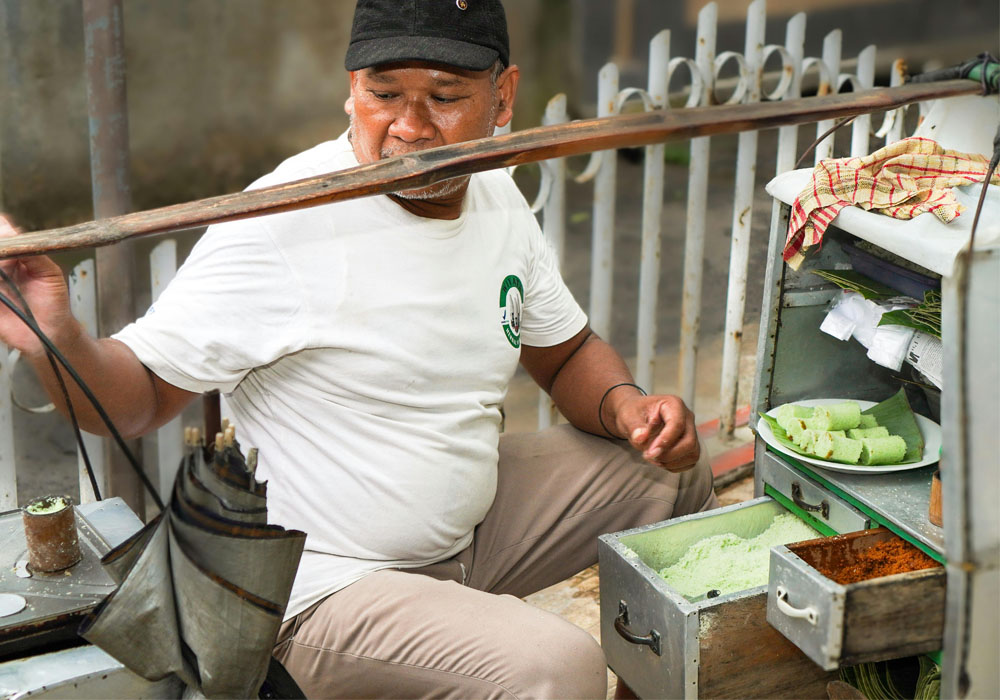
You might wonder why a cake needs to scream. The Kue Putu cart is a marvel of street-side ingenuity. It’s usually a recycled wooden box or a tin chest sitting atop a cart, connected to a boiling pot of water hidden underneath.
A small hole in the top lets the steam escape, and when the “Uncle” isn’t cooking, he places a small whistle over the hole to let the neighborhood know he’s open for business. This constant jet of steam is the engine of the operation.
It’s the original “fast food” technology—sustainable, loud, and incredibly effective. Every time I stand by the cart, watching the white plumes of steam dance in the twilight, I feel like I’m watching a tiny, delicious steam engine at work. It reminds us that in Indonesia, the best things are still made with fire, water, and wood.
Bamboo: The Original Eco-Friendly Steamer
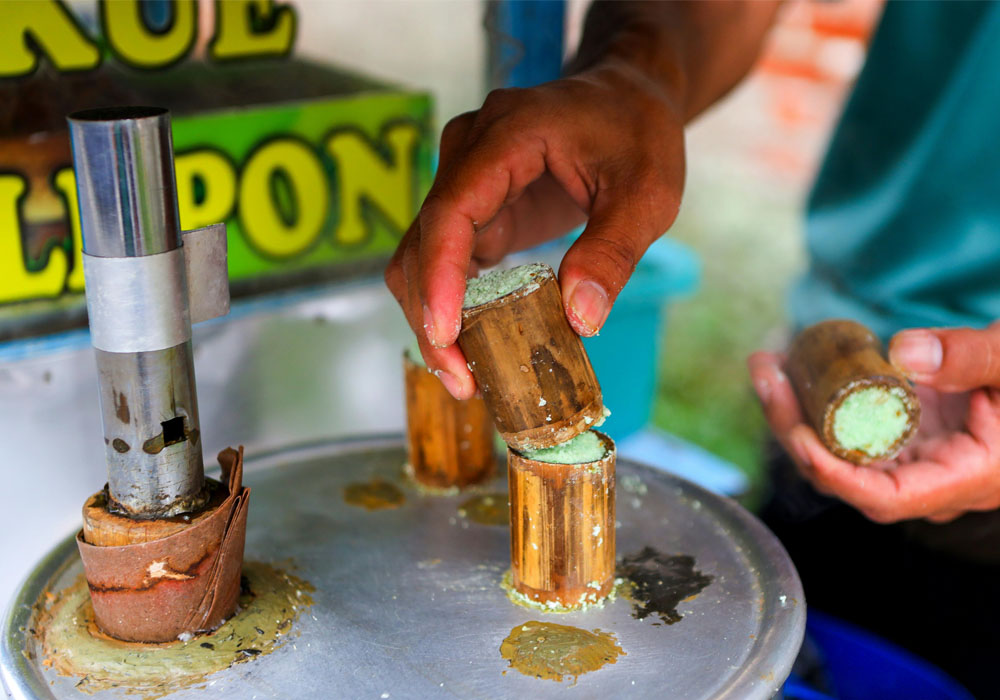
In a world of plastic and silicone, Kue Putu remains stubbornly, beautifully traditional. The mold isn’t a metal tray; it’s a series of small, hollowed-out bamboo tubes.
There’s something special about the way bamboo interacts with heat. As the steam surges through the tube, it carries the faint, woody scent of the bamboo into the rice flour. This isn’t just about shape; it’s about soul.
Each bamboo cylinder is filled with a pale, mint-green flour—colored naturally by the juices of pandan and suji leaves—and a hidden core of dark, chopped Gula Jawa (Indonesian palm sugar).
The Uncle places the tubes over the steam holes, and within two or three minutes, the rice flour rises and firms up, trapping the melting sugar inside. It’s a delicate balance; too much steam and it becomes mushy, too little and it stays powdery.
The Pandan Aromatherapy
If you’ve ever walked through an Indonesian market, you know the scent of Pandan. It’s often called “the vanilla of the East,” but that doesn’t quite do it justice.
Pandan is earthier, more herbal, and incredibly soothing. When the steam forces its way through the Kue Putu, the aroma of pandan is released in a concentrated cloud. As I wait for my order, that scent wraps around me like a warm blanket.
It’s the smell of home. The flour itself is made from soaked and ground rice, giving it a slightly coarse, crumbly texture that is the perfect vessel for the flavors to come. It’s light, airy, and gluten-free by nature—though we locals don’t think of it as “health food,” we just think of it as “the perfect snack.”
The Eruption of Gula Jawa
The true climax of eating a Kue Putu happens in the very first bite. Because the cake is steamed so quickly, the palm sugar in the center doesn’t just soften—it turns into a molten, dark syrup.
We call it “The Volcano.” You have to be careful; if you bite too quickly, the liquid gold can burn your tongue. But if you time it right, the smoky, caramel-like sweetness of the Gula Jawa floods your palate, clashing beautifully with the saltiness of the fresh coconut.
Unlike processed white sugar, our palm sugar has notes of coffee, chocolate, and dark fruit. It is deep, complex, and unrefined, harvested from the sap of palm trees and boiled down until it’s nearly black.
The Savory Contrast of Grated Coconut
In Indonesian desserts, we rarely do “purely sweet.” We crave balance. That’s where the Kelapa Parut comes in. Once the Uncle pushes the cylindrical cake out of its bamboo home using a small wooden rod, he rolls it immediately in a bed of freshly grated coconut.
This isn’t the dried, sweetened coconut you find in bags at a supermarket. This is “live” coconut—shaved thin just hours ago, still moist and full of its natural oils. We usually steam the coconut lightly with a pinch of salt and a pandan leaf to make it extra fragrant.
The saltiness of the coconut cuts through the intensity of the palm sugar, making the whole experience savory and sweet at the same time. It’s the secret ingredient that keeps you coming back for a second, third, and fourth piece.
A Ritual of the Twilight Hours
Kue Putu is rarely a morning food. It belongs to the Senja—the golden hour when the sun is dipping below the horizon and the air starts to cool. It’s the time when families sit out on their front porches and neighbors stop to chat.
When you buy Kue Putu, you aren’t just buying a snack; you’re participating in a social ritual. You stand around the cart, chatting with the vendor about the day’s weather or the price of rice, while the whistle continues its steady hum.
The Uncle wraps your cakes in a piece of wilted banana leaf, secured with a small toothpick made of bamboo. There is no plastic fork, no cardboard box. Just the heat of the cake radiating through the leaf into your palms.
The Vanishing Sound of the Streets
Sadly, the whistle is becoming rarer. In the big cities like Jakarta or Surabaya, modern bakeries and air-conditioned malls are pushing the street vendors further into the outskirts.
But for those of us who grew up with this sound, we seek it out. We know that a Kue Putu from a mall will never taste the same because it lacks the “seasoning” of the street—the smell of the rain hitting the hot asphalt, the distant sound of a neighbor’s radio, and the patience of the Uncle who has been turning bamboo tubes for thirty years.
Finding Your Own Slice of Indonesia
To truly find the best Kue Putu, you have to get off the main tourist tracks and into the kampungs (villages). Whether you are exploring the cultural heart of Yogyakarta or the hidden alleys of North Bali, the best way to experience our food is to live among us.
Stay in a local guesthouse, rent a car to explore the backroads, and join a guided food tour to learn the secrets that aren’t in the guidebooks. Indonesia is a country that rewards the curious and the hungry.
If you’re ready to hear the whistle for yourself and taste the molten magic of Kue Putu, here are some of my favorite tools to plan your journey. If you use the links below to book your adventure, it helps support gindoo.com so I can keep sharing these local stories with you.
Best of all, using these links comes at absolutely NO extra cost to you—you get the best rates available, and the platforms simply share a small piece of their fee with me to keep the site running.
- Accommodations: Find a cozy local stay near the best street food markets on Booking.com or Agoda.
- Experiences: Discover hidden food gems and heritage walks through GetYourGuide.
- Transport: To find those hard-to-reach local villages where the traditional carts still roam, I recommend checking DiscoverCars.