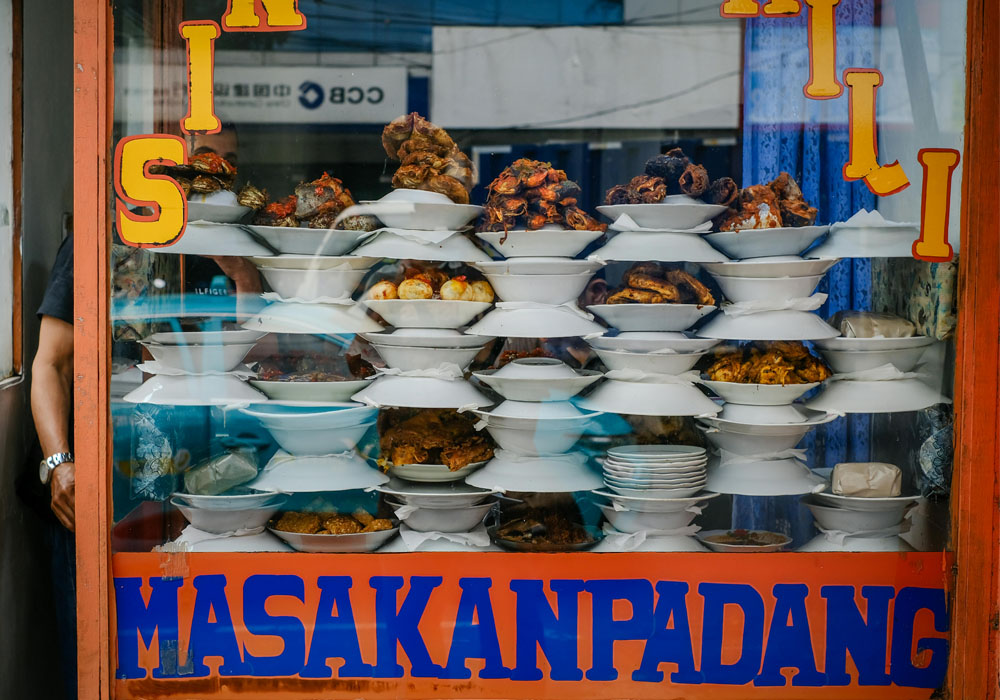
Nasi Padang or Padang Food isn’t just a meal; it’s a performance. When you walk into a traditional Rumah Makan Padang, you aren’t just greeted by the staff—you’re greeted by a towering pyramid of plates stacked in the window, a display of culinary architecture that promises you won’t leave with an empty stomach.
If you are planning your own culinary pilgrimage to Sumatra or looking for the best spots in Jakarta, you can find the perfect home base through Booking.com or Agoda to stay close to the legendary spice markets.
The Art of the “Manunggu”
The true magic happens the moment you sit down. If you’re eating Hidang style, you don’t even need to look at a menu. You watch in awe as the waiters perform a feat of ultimate balance, carrying a dozen plates stacked high along their arms, gracefully laying them out across your table like a delicious mosaic.
You quickly learn the local “choose your own adventure” rule: the table is a buffet, but you only pay for the plates you actually touch or eat from.
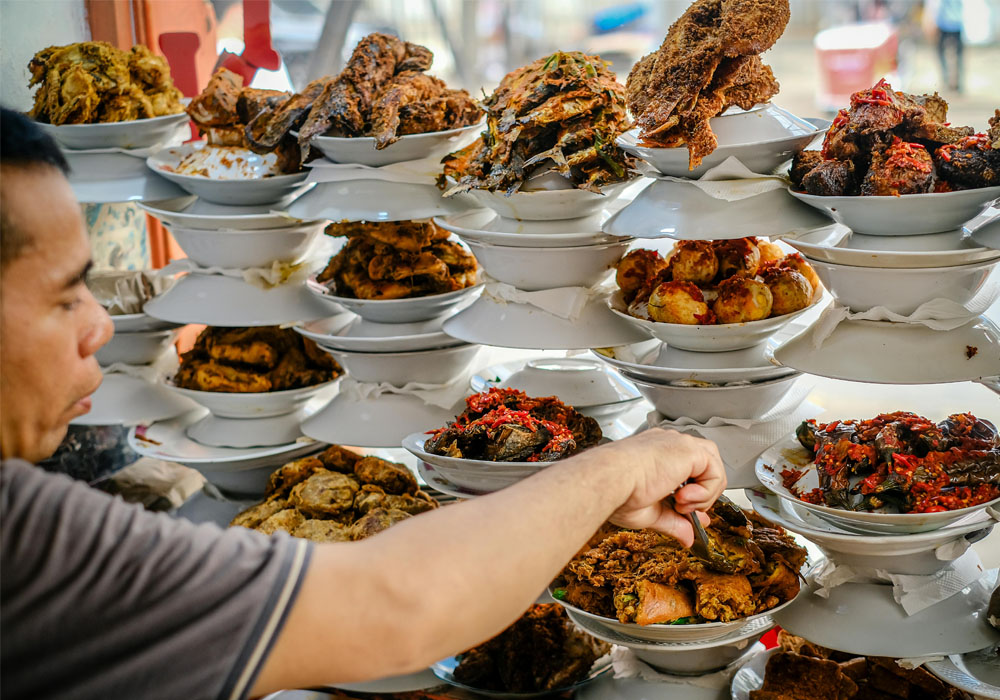
As you sit before this feast, you tuck your left hand away and prepare to eat with your right—the only proper way to truly experience the texture of the grain and the thickness of the sauce.
To find a local guide who can show you the hidden gems where the locals actually eat, check out the food tours on GetYourGuide or Viator.
The Taste of Patience: Beef Rendang
You have to start with the Rendang. It’s the soul of the meal. Any local will tell you that a good Rendang takes hours—sometimes days—of slow-cooking beef in coconut milk and a secret galaxy of spices until the liquid evaporates. You have to embrace the richness of that coconut milk; it’s where all the heart of the dish lives.
One bite, and you taste the history of West Sumatra:
- The steady heat of the chili.
- The citrusy zing of lemongrass and kaffir lime.
- The buttery, caramelized essence of the reduced spices.
The “Flood” of Flavors Padang Food
While the restaurant experience is grand, there is a local secret to the Nasi Bungkus (takeaway). Food packed in a banana leaf and brown paper somehow tastes better after it has sat for thirty minutes. We call it Nasi Siram (drenched rice). When you unwrap that brown paper, the aromas of turmeric, galangal, and fried shallots hit you all at once.
If you’re traveling between cities to find the most authentic regional variations, grabbing a rental through DiscoverCars gives you the freedom to pull over at any roadside stall that catches your eye.
Using your fingertips to mix a little bit of everything—the creamy jackfruit curry, the crunchy paru goreng (fried lung), and that indispensable kick of red chili—is the only way to ensure every grain of rice is coated in flavor.
More Than Just a Full Belly
Eating Padang food is an experience of abundance. It’s about the clinking of small plates, the heat that makes you sweat just a little bit, and the cold glass of Es Teh Manis that saves your tongue at the end.
Whether you are in a tiny stall on a dusty corner or a grand restaurant with tiered roofs, that first bite of rice soaked in yellow gulai sauce tells you one thing: you are home.