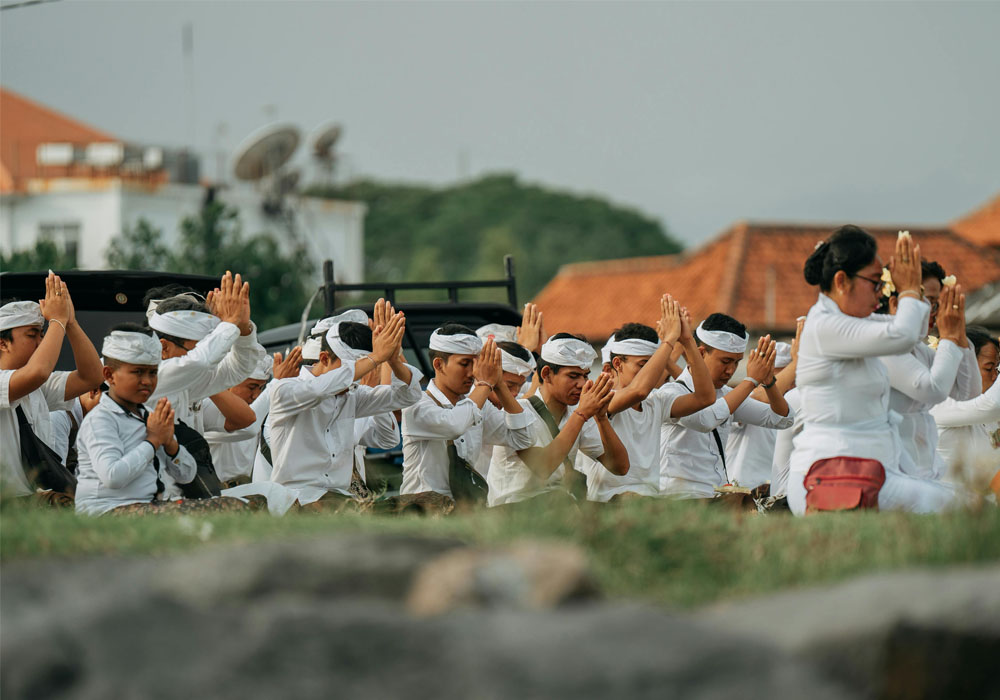
Nyepi is perhaps the most “authentic” Balinese experience. It shows the Balinese value the soul over the economy, and peace over progress.
I am visiting the village in the early morning, but today, the world sounds different. Usually, Ubud is a symphony of motorbike hums, clinking coffee cups, and the distant chatter of the morning market. Today, there is only the wind. I stand on my balcony and hear a sound I have never heard in a town of thousands: the rhythmic flapping of a heron’s wings as it flies low over the rice paddies.
This is Nyepi, the Balinese Day of Silence. For 24 hours, the most vibrant island in Indonesia turns inward, falling into a state of meditative stillness that is unlike anything else on Earth.
The Night Before the Silence: The Ogoh-Ogoh
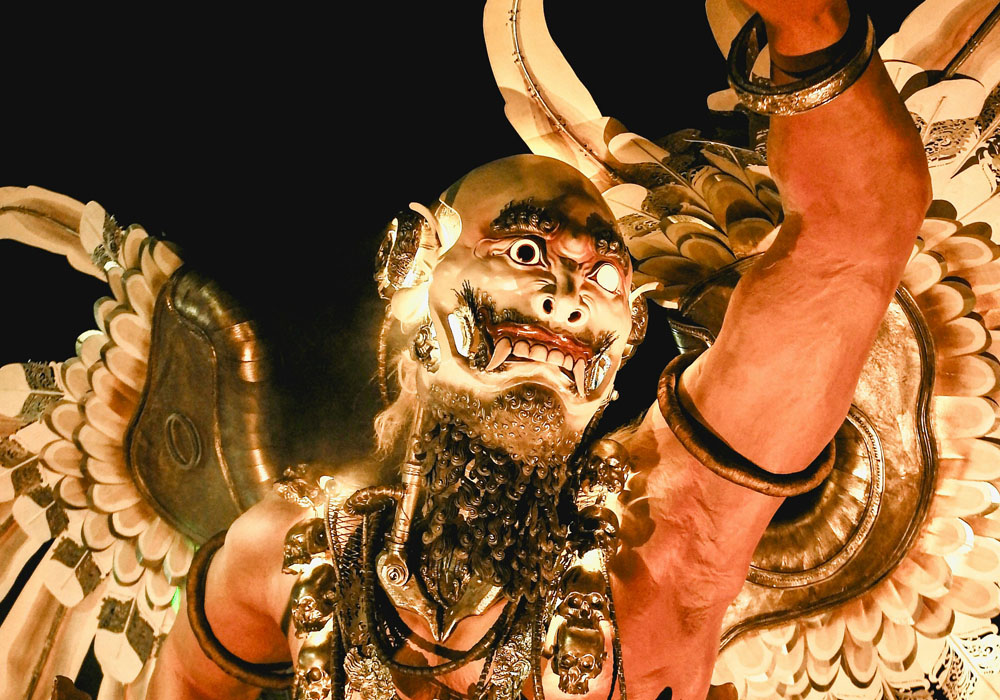
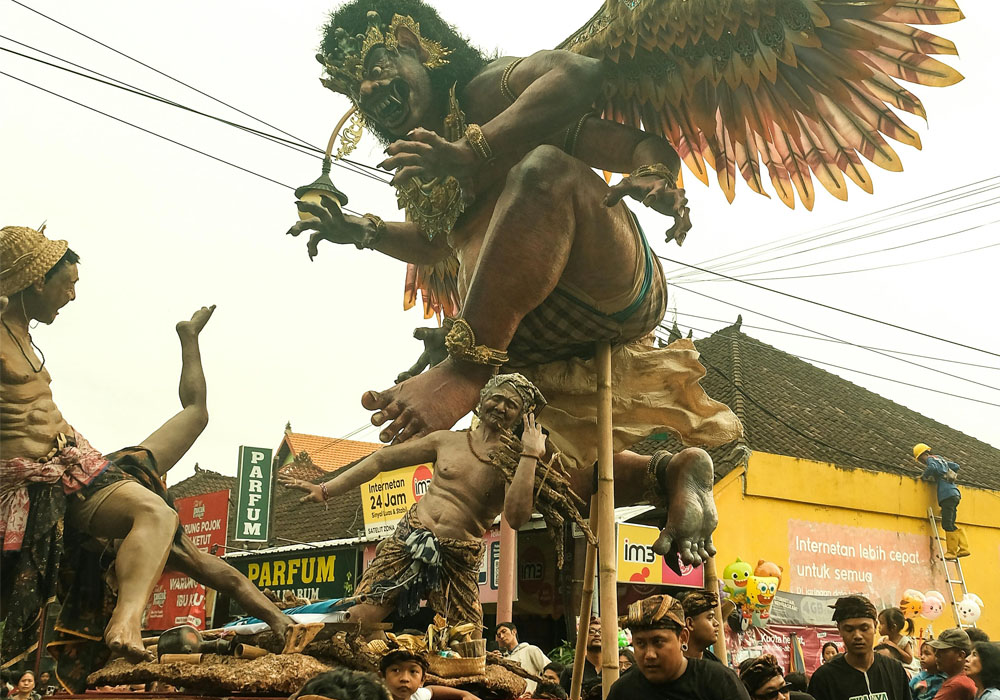
To understand the silence, you must first experience the noise. The evening before Nyepi, known as Ngerupuk, Ubud is a riot of fire and fury. Giant, grotesque effigies called Ogoh-Ogoh — representing demons, greed, and the darkness of the human ego — are paraded through the streets.
The youth of each Banjar (village ward) carry these towering monsters on bamboo litters, spinning them at crossroads to confuse evil spirits. Torches are lit, gongs are smashed, and the air is thick with the spirit of “driving out the old.” By midnight, the monsters are burned or taken away, and a sudden, heavy blanket of quiet drops over the island.
The Four Sacred Prohibitions
Nyepi is the start of the Balinese Saka New Year. While the rest of the world celebrates with fireworks, Bali celebrates by vanishing. From 6:00 AM until 6:00 AM the following day, the entire island observes the Catur Brata Penyepian (Four Prohibitions):
- Amati Geni (No Fire/Light): No lamps are lit, and no stoves are turned on.
- Amati Karya (No Activity): No work is done.
- Amati Lelunganan (No Travel): No one is allowed on the streets. The airport closes, and even the harbor is still.
- Amati Lelanguan (No Entertainment): No loud music, no TV, and for many, no talking or eating.
In Ubud, this is enforced by the Pecalang — traditional village security guards dressed in black vests and checkered sarongs — who patrol the empty streets to ensure the sanctity of the silence.
Local Wisdom: Recharging the Earth
Sitting in the stillness of my garden, the local wisdom of Nyepi becomes clear. The Balinese believe that if the island is completely dark and silent, the evil spirits flying overhead will think Bali is uninhabited and leave it in peace for another year.
But there is a deeper, more modern wisdom here. Nyepi is a Self-Purification ritual. By stopping the noise of the outside world, you are forced to listen to the noise inside your own mind. It is a day for Mulatsari (self-reflection). Furthermore, it is a day of healing for the environment. On this day, carbon emissions in Bali drop to zero, and the earth gets a rare 24-hour Sabbath to breathe without human interference.
BOOK YOUR ACTIVITIES IN UBUD
The Midnight Reward: The Milky Way
The most magical part of Nyepi in Ubud happens when the sun goes down. Because there is no light pollution — no streetlamps, no billboards, no porch lights — the sky becomes a masterpiece.
I look up and see the Milky Way stretched across the heavens like a river of diamonds. Without the glow of the city, the stars feel close enough to touch. It is a humbling reminder of our place in the cosmos, a sight that can only be earned through a day of absolute stillness.
Traveling During Nyepi: Essential Information
If you plan to be in Ubud for Nyepi, you must prepare like a local:
- The Rules Apply to Everyone: Whether you are Hindu, Muslim, Christian, or a tourist, you must stay inside your hotel or villa. You cannot walk on the street or go to the beach.
- Stock Up: All shops, pharmacies, and ATMs are closed. Buy your snacks, water, and medicine at least two days in advance, as the day before (Ngerupuk) is chaotic and shops close early.
- Hotel Services: Most hotels in Ubud offer “Nyepi Packages.” While you must stay on the grounds, the hotel will still provide food (usually with limited menus) and keep the pool open, though you are asked to keep noise to a minimum.
- The Best Time to Visit: Nyepi follows the lunar calendar, usually falling in March. Check the specific dates for 2026 or 2027 well in advance, as travel in or out of Bali on that specific day is impossible.