Nyang Nyang beach reminds me that the best things in life are rarely easy to reach.
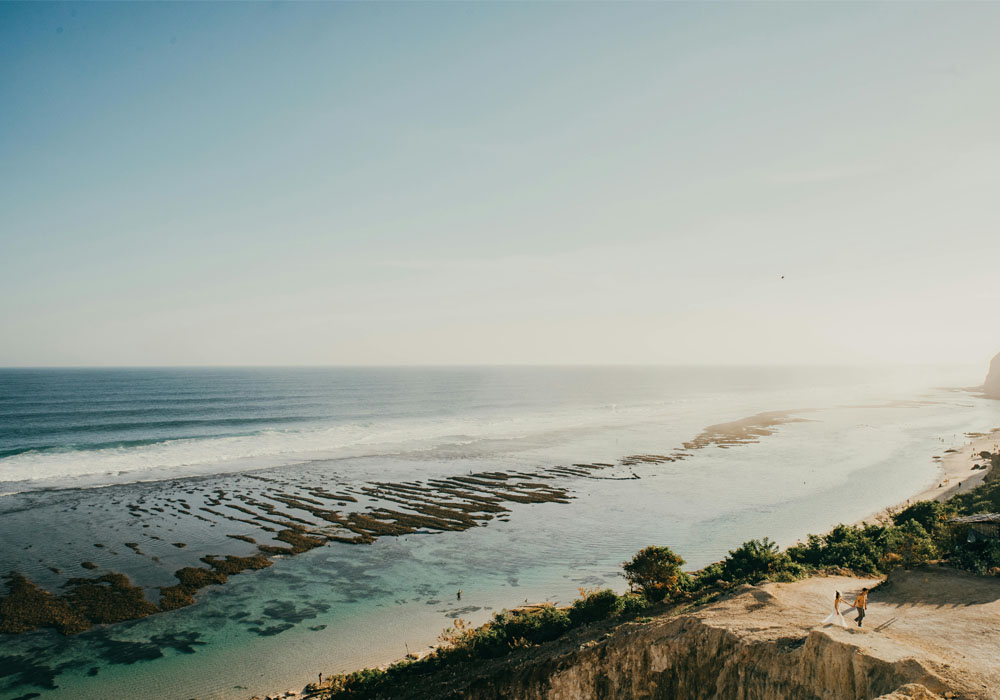
I am visiting the cliffside in the early morning, standing at the edge of the limestone plateau in Uluwatu. Below me, the Indian Ocean stretches toward the horizon in a thousand shades of sapphire and turquoise.
While the famous surfing spots nearby are already buzzing with activity, here at Nyang Nyang, the world feels raw and untouched. The wind carries the scent of salt and wild grass, and the only path down is a steep, winding trail carved into the face of the cliff.
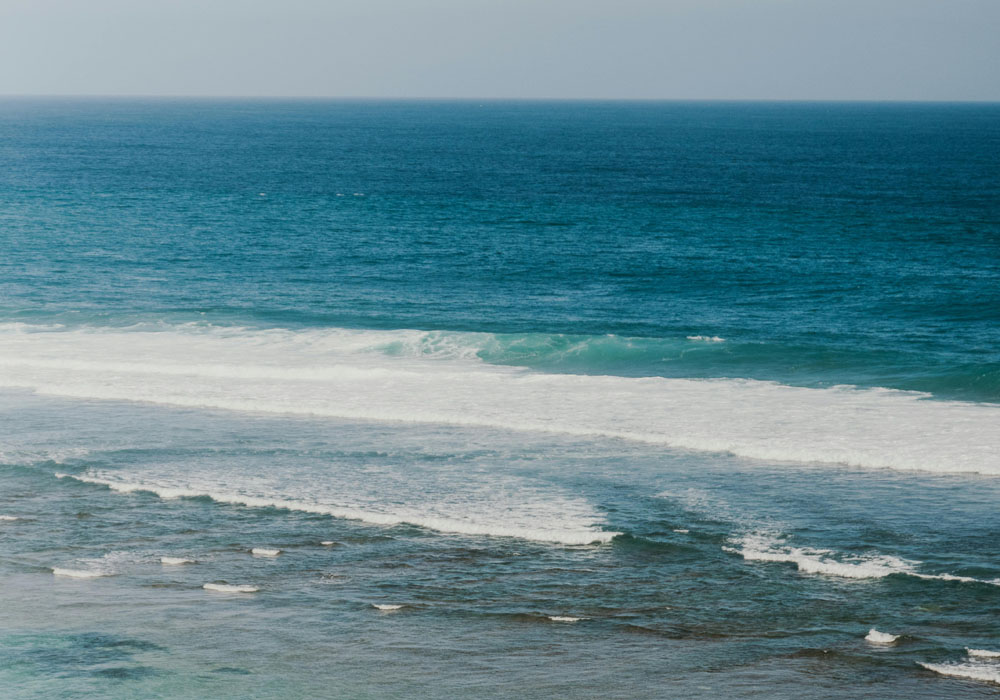
Descending to Nyang Nyang is not a casual stroll; it is a pilgrimage of effort. With every step down the limestone path, the sounds of the modern world—the hum of motorbikes and the chatter of cafes—fade away, replaced by the rhythmic, thunderous boom of the swell hitting the reef.
The Legend of the Shipwreck
As I finally reach the bottom and my feet hit the soft, golden sand, I am greeted by an unusual sight. Half-buried in the shoreline are the rusted, graffiti-covered remains of a shipwreck. Local stories tell of several vessels that have met their end on these jagged reefs over the decades, unable to contend with the power of the southern swells.
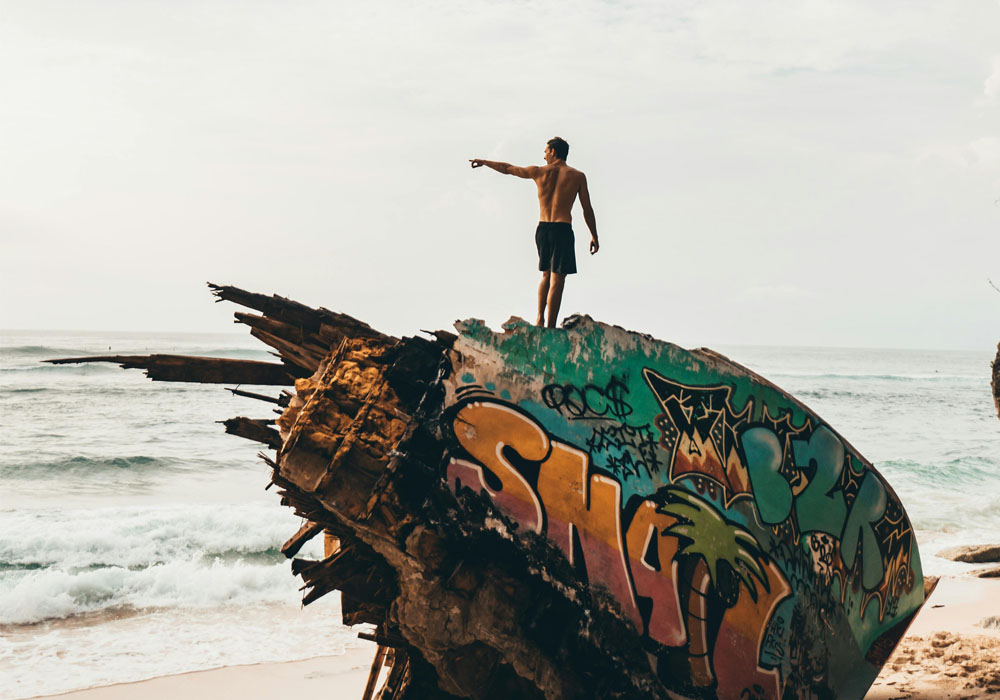
The most famous of these is an old vessel that has been transformed into a piece of living art. Local and international artists have covered the hull in vibrant murals, creating a surreal contrast between the man-made wreckage and the natural beauty of the white sand. It serves as a silent monument to the power of the sea—a reminder that here, nature is the ultimate architect, reclaiming whatever we leave behind.
Local Wisdom: The Law of the Sea
There is a specific kind of local wisdom found among the few seaweed farmers and fishermen who frequent this stretch of coast. They speak of the “Breath of the Ocean.” Unlike the calmer beaches in the north of Bali, Nyang Nyang is exposed to the full force of the Indian Ocean.
The wisdom here is one of Resilience and Respect. The locals know that you do not fight this water; you wait for its permission. They teach that the ocean gives and the ocean takes—whether it is the salt they harvest or the ships it swallows. For a traveler, the wisdom of Nyang Nyang is a lesson in solitude. In a world that is increasingly crowded, finding a place where you are the only soul for hundreds of meters is a way to find yourself again. It is the Balinese concept of Sepi—not just silence, but a profound, purposeful stillness.
The Hike and the Reward
Walking along the two-kilometer stretch of sand, I realize why this beach remains so quiet. The sheer effort required to reach it acts as a natural filter. Those who make the trek are rewarded with a pristine coastline where the sand is coarse and white, and the tide pools are filled with tiny neon fish and emerald-green moss.
Above me, paragliders catch the updrafts from the cliffs, circling like giant tropical birds. From their perspective, I must look like a tiny dot on a massive canvas of gold and blue. Down here, the scale of the cliffs makes every human worry feel small and insignificant.
FIND ACTIVITIES IN ULUWATU
Planning Your Descent to the Secret Shore
If you want to share this hidden gem with your Gindoo readers, here is the practical guide to surviving the trek:
- How to Get There: Nyang Nyang is located on the southern coast of the Bukit Peninsula. Follow the signs toward “Nyang Nyang Surf Camp” or “Villa Plenilunio.” There are now two main access points: the traditional steep trek and a newer, slightly easier gravel road for scooters (though it is still very steep).
- Entrance Fees: There is typically no formal entrance fee to the beach itself, but you may be asked for a small “contribution” or parking fee of around IDR 5,000 to 10,000 by the local community members who maintain the path.
- Best Time to Visit: Arrive by 7:00 AM. The climb back up at noon is punishing under the tropical sun. By starting early, you enjoy the cool morning air and have the beach entirely to yourself.
- Important Safety Note: This is not a swimming beach for beginners. The currents are incredibly strong, and there are no lifeguards. It is a place for walking, reflecting, and perhaps a quick dip in the shallow tide pools during low tide.
A Final Reflection
As I begin the long climb back up the cliff, my legs burning and my skin coated in a fine layer of salt, I look back one last time. Nyang Nyang reminds us that the best things in life are rarely easy to reach. It is the “Wild West” of Bali—a place where the land meets the sea with a violent, beautiful energy.