Majapahit eventually faded in the 15th century as trade routes shifted and Islam began to spread across Java, leading much of the nobility to flee to Bali—carrying their art, religion, and culture with them.
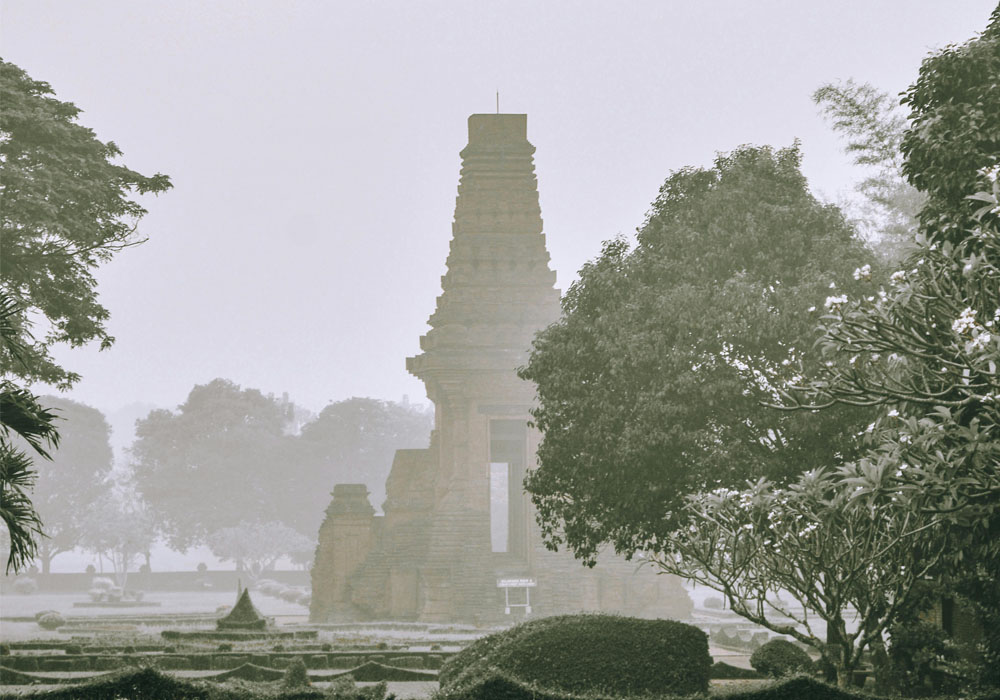
I am visiting the ancient plains of Trowulan in East Java in the early morning, as the first rays of light cut through the tropical haze to illuminate the red-brick gateways of a lost world. The air here feels heavy with the weight of centuries. Unlike the stone-carved mountain temples of Central Java, the remnants of the Majapahit Empire are built from warm, weathered terracotta bricks—earth turned to fire, then to history.
Standing before the towering Candi Bajang Ratu, I realize I am walking on the very ground where the greatest maritime power in Southeast Asian history once breathed, traded, and ruled.
The Rise of the Crescent Moon
The story of Majapahit is a masterclass in resilience and strategy. Founded in 1293 by Raden Wijaya, the empire rose from the ashes of the Singhasari Kingdom. In a brilliant display of cunning, Wijaya used the invading Mongol forces of Kublai Khan to defeat his local rivals, only to turn around and drive the Mongols back to their ships.
Under the reign of King Hayam Wuruk and his legendary Prime Minister, Gajah Mada, in the 14th century, Majapahit reached its golden age. From this capital in Trowulan, the empire’s influence stretched across the Indonesian archipelago, reaching as far as the Malay Peninsula, southern Thailand, and the Philippines.
It was a “Thalassocracy”—a kingdom of the sea—unified by a powerful navy and a sophisticated agricultural system that turned the Brantas River valley into a breadbasket for the region.
The Oath of Unification: Sumpah Palapa
At the heart of the Majapahit spirit is the Sumpah Palapa, the solemn oath taken by Gajah Mada. He swore that he would not “taste the spices” (refrain from worldly pleasures and rest) until he had unified the islands of Nusantara under one banner.
This wasn’t just a military conquest; it was the birth of the idea of a unified Indonesia. Local wisdom from this era is best captured in the phrase “Bhinneka Tunggal Ika” (Out of many, one), written by the court poet Mpu Tantular. It was originally a call for religious tolerance between Buddhists and Hindus within the empire. Today, this 700-year-old wisdom is the national motto of modern Indonesia, proving that the intellectual legacy of Majapahit outlasted its physical walls.
FIND ACTIVITIES IN MOJOKERTO
The Terracotta City
Walking through the Trowulan archaeological site, you begin to see how advanced this civilization was. Excavations have revealed a sophisticated network of canals and reservoirs, like the massive Kolam Segaran, a man-made pool the size of several football fields.
Legend says that after royal banquets, the Majapahit nobility would throw their gold plates into the pool just to show off their immense wealth to foreign dignitaries. The local wisdom here is one of Abundance and Hospitality. The Majapahit people were masters of water management, understanding that to rule the land, one must first respect and direct its lifeblood.
Planning Your Journey to the Heart of History
If you go to East Java to discover these roots, here is the essential guide:
- How to Get There: Trowulan is located in the Mojokerto Regency, about a 1.5 to 2-hour drive from Surabaya. It is best reached by renting a private car for the day.
- Entrance Fees: Visiting the various sites (Candi Tikus, Bajang Ratu, and the Trowulan Museum) is very affordable. Each site typically costs around IDR 5,000 to 10,000 for entry.
- The “Must-See” Circuit: * Candi Bajang Ratu: The most beautiful and intact gateway.
- Candi Tikus: A ritual bathing pool located below ground level.
- The Trowulan Museum: To see the famous “Majapahit Piggy Banks” (celengan), which prove they were one of the first societies to use a cash-based economy with coins.
- Best Time to Visit: July to September during the dry season. The red bricks look most vibrant in the late afternoon sun (around 4:00 PM), providing a perfect backdrop for photography.
Majapahit eventually faded in the 15th century as trade routes shifted and Islam began to spread across Java, leading much of the nobility to flee to Bali—carrying their art, religion, and culture with them.