Lake Bratan is where Bali’s physical beauty meets its spiritual survival. Without this lake, there would be no emerald rice terraces, and without the Goddess, there would be no Bali.
I am visiting the lakeside in the early morning, as a thick, ethereal fog rolls down from the peaks of the Bedugul highlands. The air here is sharp and thin, smelling of pine needles and damp moss—a world away from the tropical heat of the southern plains. Before me, the surface of Lake Bratan is as smooth as a polished mirror, so dark and still that it seems to hold the secrets of the mountains within its depths.
As the sun begins to burn through the mist, the iconic multi-tiered shrines of Pura Ulun Danu Bratan appear to float magically upon the water. It is a sight that has graced the Indonesian 50,000 rupiah note for years, but standing here in the silence of the dawn, the reality is far more spiritual than any photograph can capture.
The Goddess of the Waters
To understand Lake Bratan, one must look to the heavens. Built in 1633 by the King of Mengwi, the temple complex is dedicated to Dewi Danu, the Goddess of the Lake, Rivers, and Water. Because Lake Bratan is the primary source of irrigation for the rice paddies of central Bali, it is considered the lifeblood of the island’s agriculture.
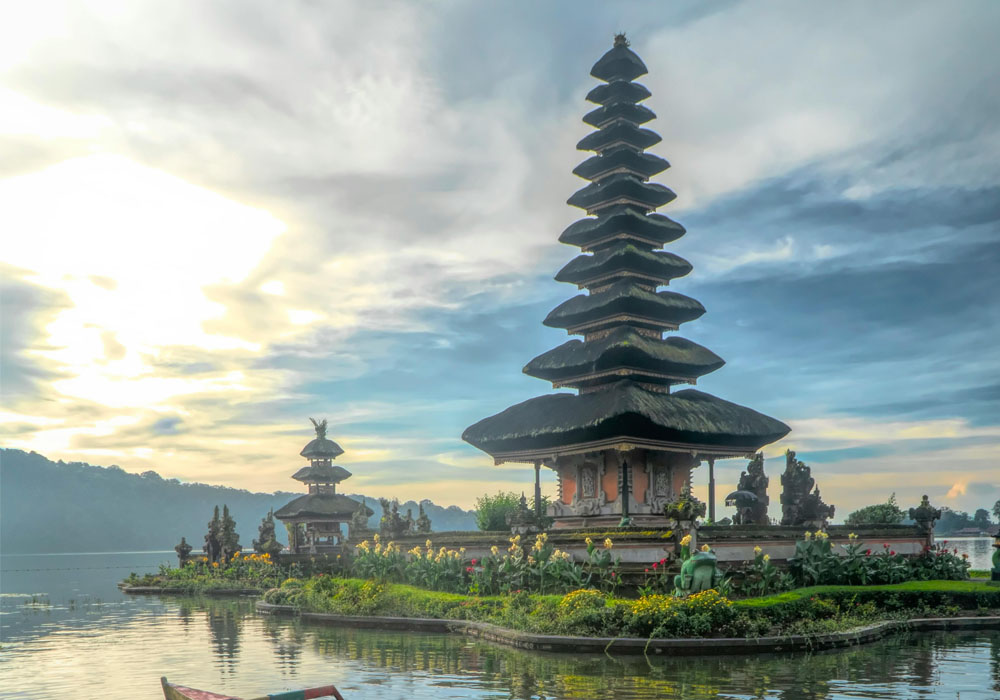
The architecture itself is a masterpiece of symbolic balance. The main shrine, the Pelinggih Meru Tumpang Sebelas, features eleven tiers and is dedicated to the god Shiva and his consort Parvati. Interestingly, within the same sacred grounds, you will find a Buddhist stupa—a testament to the ancient harmony between Hinduism and Buddhism in Bali. This temple was built to ensure that the “holy water” would never cease to flow, protecting the farmers and the food supply of the entire kingdom.
The Flow of Subak
The wisdom of Lake Bratan is the wisdom of Subak, Bali’s ancient, UNESCO-protected irrigation system. The Balinese believe that water is a gift from the Goddess, and therefore, it must be shared fairly among all.
There is a philosophy here of “Tri Kaya Parisudha”—to think, speak, and act with purity. This extends to the water itself. The farmers believe that if they treat the water with respect and perform the necessary rituals at the lake, the Goddess will provide a bountiful harvest. It is a lesson in Interconnectedness: what happens at the top of the mountain at Lake Bratan affects the smallest rice stalk in a valley miles away. In the Balinese mind, there is no “my water” or “your water”—there is only the Water of the Goddess, shared by the community.
The Mirror of the Soul
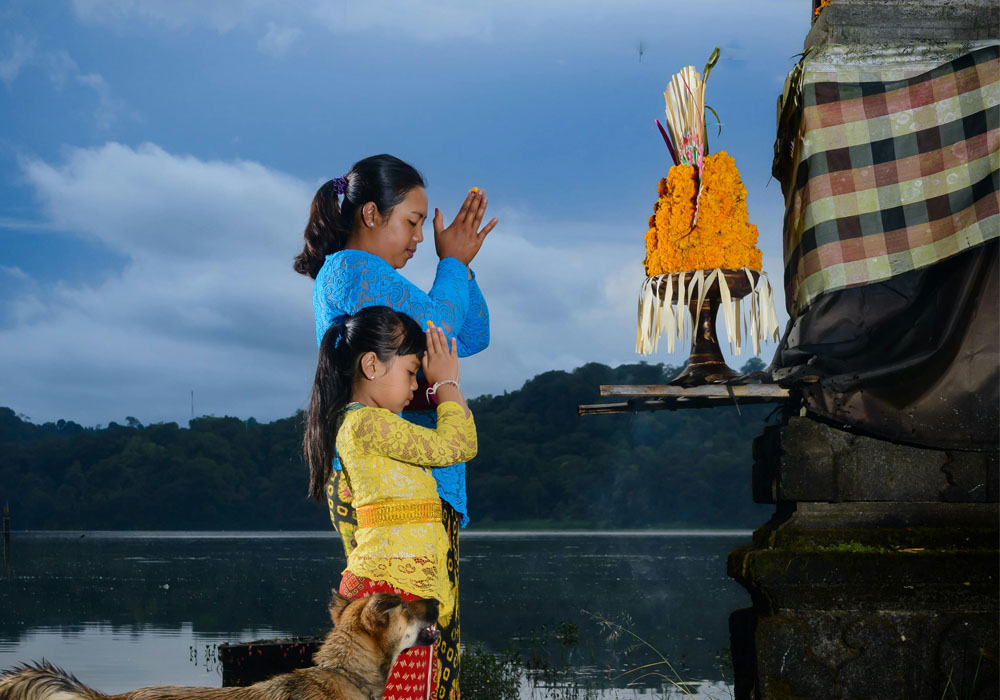
Walking along the manicured gardens surrounding the lake, I watch as local pilgrims arrive in their ceremonial white lace. They carry elaborate offerings of fruit and flowers to the water’s edge. There is a profound sense of humility here. The mountains—Mount Bratan and Mount Catur—loom over the lake like silent guardians.
The reflection of the temple in the water is often called the “Mirror of the Soul.” Locals say that the lake shows you who you truly are. If you arrive with a busy, chaotic mind, the mist will stay thick; but if you arrive with a quiet heart, the Goddess will reveal the temple in all its golden glory.
- Need a Private Driver or Tour Guide to Explore Bedugul via GetYourGuide.
Planning Your High-Altitude Escape
For you who are looking to trade the beach for the clouds, here is the 2026 guide to Bedugul:
- How to Get There: Lake Bratan is located in the Candikuning village, Tabanan. It is a scenic 1.5 to 2-hour drive from Ubud or Seminyak. The road climbs steeply, so make sure your scooter or car is in good condition for the mountain pass.
- Entrance Fees (2026): The entrance fee for international tourists is IDR 75,000 for adults and IDR 50,000 for children. If you wish to take a traditional “jukung” boat ride on the lake for a better view of the floating shrines, it costs approximately IDR 100,000 to 150,000 per boat.
- Best Time to Visit: 8:00 AM to 10:00 AM. This is the “magic window” before the clouds descend for the afternoon and before the day-trip buses arrive from the south. The light is soft, and the reflection on the water is at its most perfect.
- What to Pack: Bring a jacket. Temperatures in Bedugul can drop to 15°C (60°F) in the early morning, which can be quite a shock if you’re coming from the coast.
Lake Beratan is where Bali’s physical beauty meets its spiritual survival. Without this lake, there would be no emerald rice terraces, and without the Goddess, there would be no Bali.