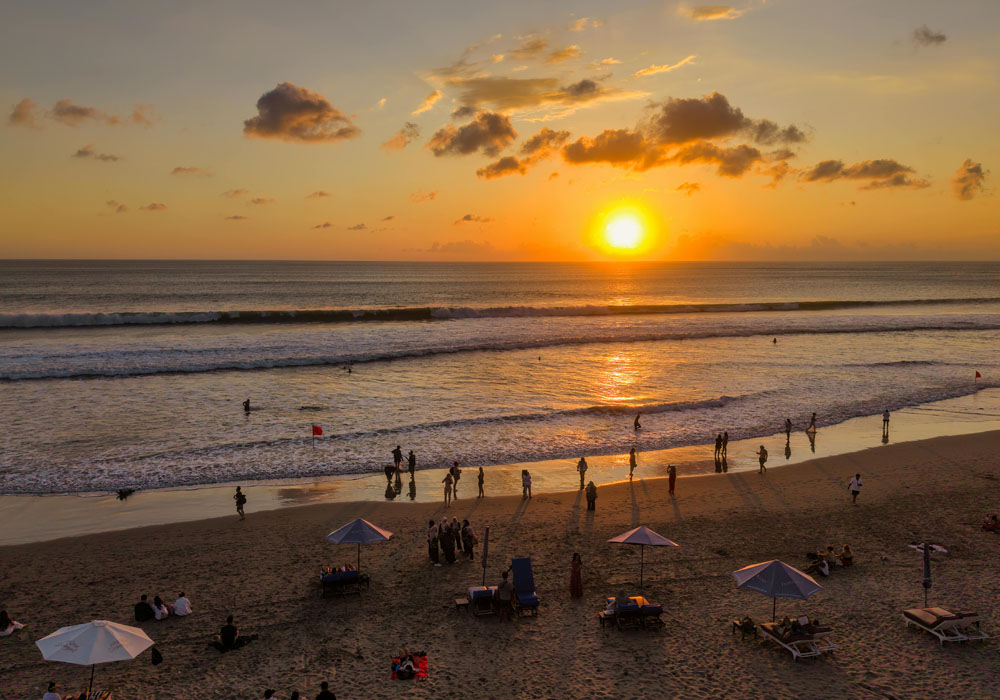
Kuta is often criticized for being “too touristy,” but to skip it is to miss a vital part of the Indonesian spirit. It is a place of second chances, of learning to surf, and of watching the sun die and be reborn every day.
I am visiting the shore in the late afternoon, just as the tropical sun begins its slow, heavy descent toward the Indian Ocean. The heat of the day is softening into a warm glow, and the famous long stretch of golden sand is pulsing with a life that is uniquely Balinese. To my left, the iconic split gateway of the beach wall stands as a portal between the frantic energy of the streets and the timeless rhythm of the tide.
Kuta is not the quiet sanctuary of Ubud or the hidden cliff of Nyang Nyang. It is the heart of Bali’s modern story—a place where the world meets the island in a swirl of salt, Bintang singlets, and surfboards.
The Transformation of the “Onion Skin”
To understand Kuta, you have to look past the neon lights and the shopping malls. Long before it was a global tourism mecca, Kuta was a quiet fishing village and a small trading port. In the 1930s, an American couple, Robert and Louise Koke, opened the first Kuta Beach Hotel, sensing that the world would fall in love with these waves.
The name “Kuta” is often associated with the word for “fortress” or “enclosure,” but for generations, it was the gateway for those arriving by sea. It was here that the first “hippies” and surfers of the 1970s pitched their tents, drawn by what is still considered one of the best beach breaks in the world. What was once a simple coastline has grown into a sprawling labyrinth, yet the soul of the village remains in the small gangs (alleys) where families still offer daily canang sari to the gods amidst the roar of passing scooters.
Local Wisdom: The Spirit of “Gotong Royong”
Amidst the commercial chaos, there is a deep-seated local wisdom that keeps Kuta functioning: Gotong Royong, or “mutual cooperation.”
You see it every morning when the “Beach Clean-up” crews—often made up of local vendors, surf instructors, and hotel staff—work together to clear the plastic that washes ashore during the monsoon season. You see it in the Satgas Pantai (Beach Security), locals who volunteer to keep the shoreline safe and orderly.
There is a philosophy here of Resilient Hospitality. The people of Kuta have faced immense challenges—from economic shifts to the tragedy of the 2002 bombings. Yet, their wisdom lies in their ability to welcome the world back with a smile, time and time again. They teach us that a community’s strength isn’t in its walls, but in its ability to bend with the wind and remain standing.
FIND YOUR ACTIVITIES IN KUTA
The Ritual of the Sunset
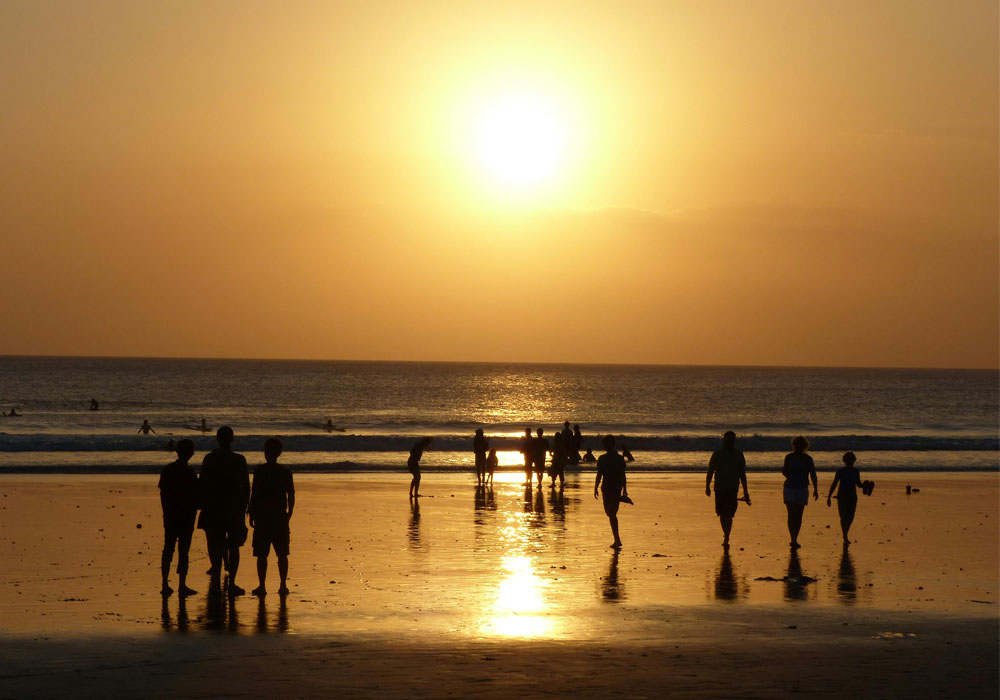
As 6:00 PM approaches, a strange magic takes over. Thousands of people—locals and travelers alike—stop what they are doing and face the west. The sky turns a violent shade of pink and gold, silhouetting the hundreds of beginner surfers catching their final waves of the day.
This is the “Kuta Cathedral.” It doesn’t matter who you are or where you came from; for those ten minutes of sunset, everyone is equal under the Balinese sky. It is a daily reminder of the Balinese concept of Rwa Bhineda—the balance of opposites. The noise of the city meets the peace of the horizon, and for a moment, everything is in harmony.
Navigating the Heart of Bali
If you are sending your Gindoo readers to the most famous beach in Indonesia, give them these “local-approved” tips:
- How to Get There: Kuta is only 15 minutes from Ngurah Rai International Airport. It is the perfect first or last stop on a Bali trip. Use “Blue Bird” taxis or the “Grab” app to avoid overpaying.
- Entrance Fees: Access to Kuta Beach is Free. You only need to pay for parking if you bring a scooter (approx. IDR 2,000 to 5,000).
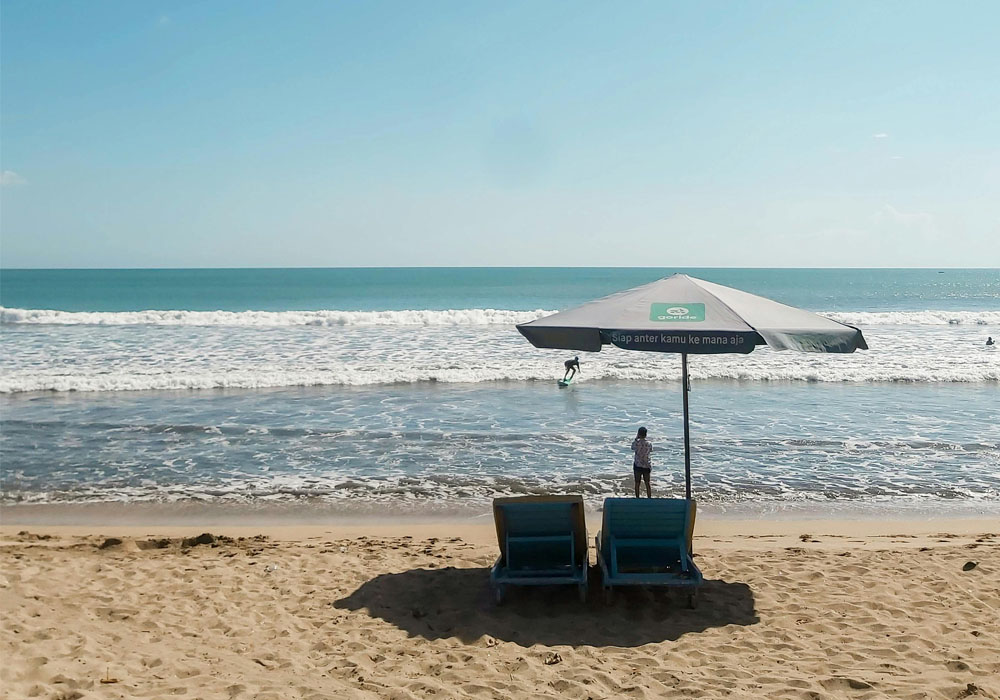
- Best Time to Visit: 5:00 PM to 6:30 PM. This is the golden window for sunset. If you want to surf as a beginner, come at high tide in the morning when the waves are gentler and the crowds are thinner.
- Support the Locals: Instead of a big beach club, rent a plastic chair and a cold drink from one of the local vendors (the Ibu-Ibu or Bapak-Bapak) sitting under the trees. A chair usually costs around IDR 50,000, and the conversation is free.
Kuta is often criticized for being “too touristy,” but to skip it is to miss a vital part of the Indonesian spirit. It is a place of second chances, of learning to surf, and of watching the sun die and be reborn every day.