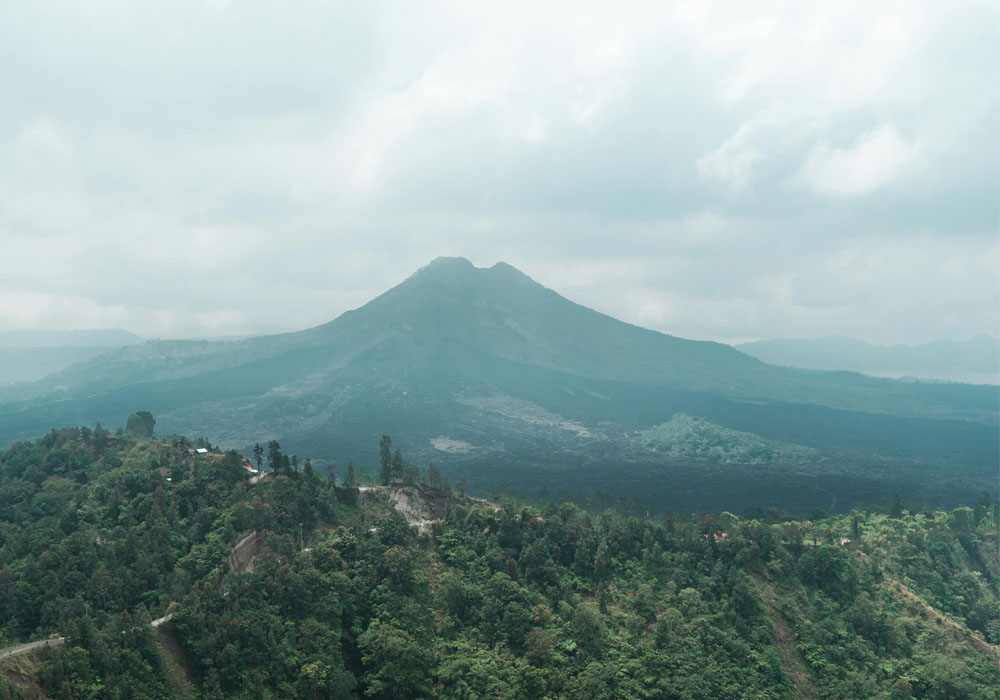
If Banyumala is the “weeping beauty” of the north, then Kintamani is the island’s ancient, brooding protector. To talk about Kintamani the local way is to talk about the “Head of the Island”—a place where the air is thin, the soil is black, and the gods feel much closer to the ground.
In the Balinese cosmology, Kintamani is a place of high vibration. It isn’t just a “viewpoint” for your morning coffee; it is a sacred caldera that holds the balance of water and fire for the entire island.
The Mother of Waters: Dewi Danu
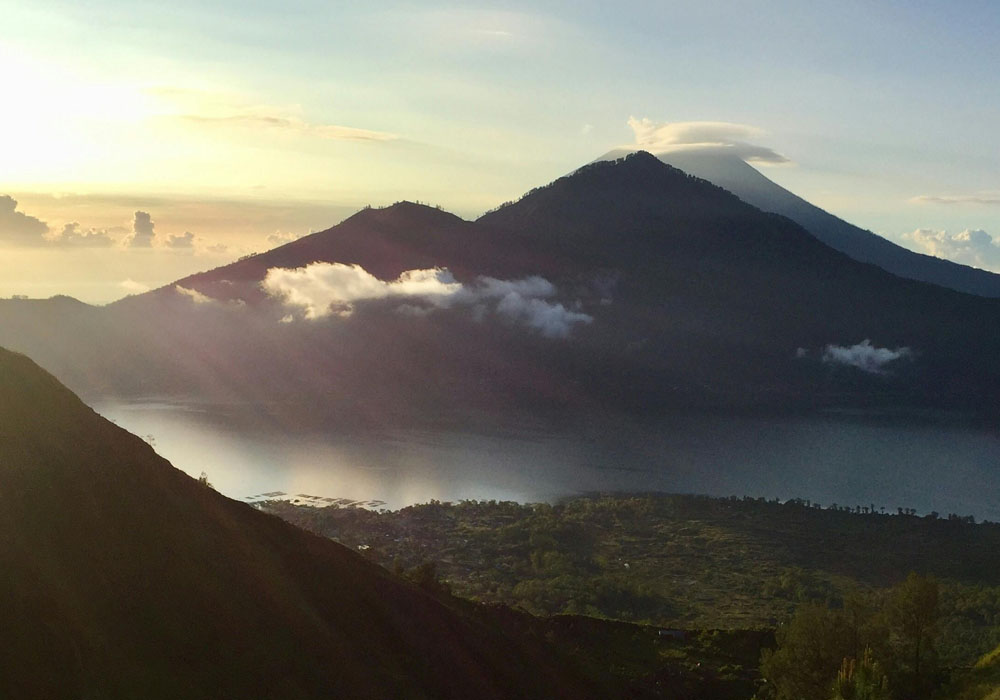
While tourists flock to the rim to photograph Mount Batur, the local heart is focused on the lake below. Lake Batur is the largest in Bali, and we believe it is the home of Dewi Danu, the Goddess of the Lake.
To the local farmers (the Subak), Kintamani is the “Water Tower.” The water from this lake doesn’t just sit there; it travels through underground volcanic veins to feed the rice terraces of Ubud, Gianyar, and beyond.
Every grain of rice you eat in Bali likely owes its life to the blessings of Kintamani. This is why Pura Ulun Danu Batur is one of the most important temples on the island. It is the temple of the “Head of the Lake,” where we pray to ensure the flow never stops.
The Resilience of Batur
There is a specific kind of “Kintamani toughness.” The people here have lived through massive eruptions — most notably in 1917 and 1926. In the 1926 eruption, lava wiped out the original village and temple at the foot of the mountain.
Local lore tells of how the lava stopped right at the gates of the temple’s most sacred shrine. The villagers took this as a sign: the gods wanted to move higher. They painstakingly carried the temple stone by stone to the rim of the caldera where it stands today. When you walk through Kintamani, you are walking on land that has been reborn from fire. The black lava fields (Lava Hitam) aren’t just a “cool landscape”; they are the scars of the mountain’s power.
- Looking for activities in Kintamani or around Bali? Book a [Tour or Private Driver via GetYourGuide].
The Mystery of the “Old Balinese” (Bali Aga)
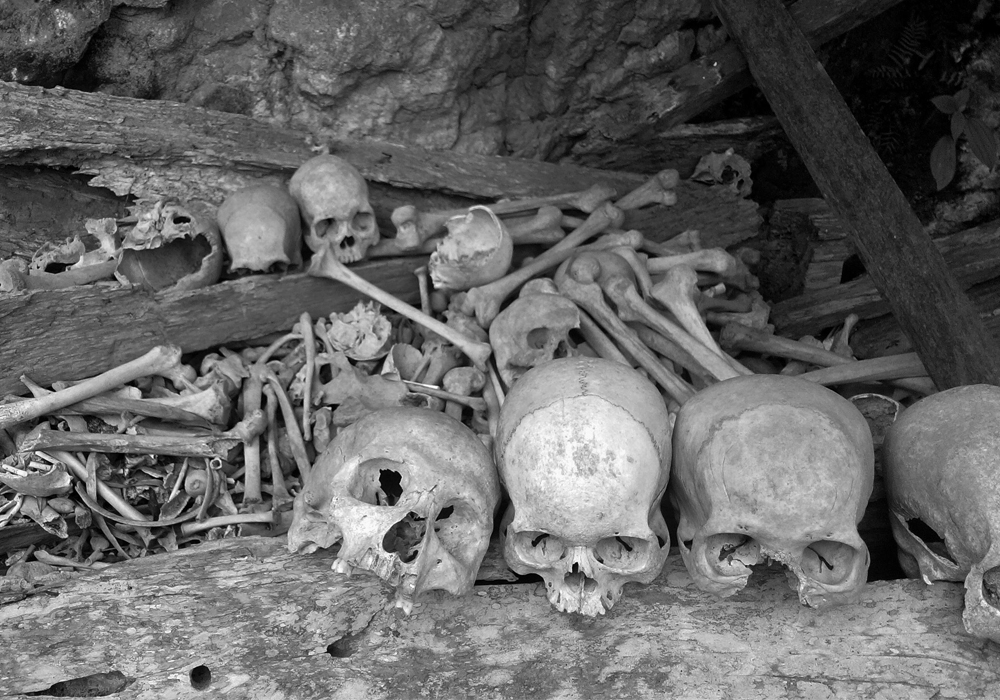
Across the lake, tucked against the caldera wall, lies Trunyan. This is one of the few remaining Bali Aga (Indigenous Balinese) villages. Their wisdom predates the Majapahit influence seen in the rest of Bali.
In the local way of thinking, life and death are a circle. In Trunyan, they do not cremate their dead. Instead, they lay the bodies under a magical Taru Menyan (Fragrant Tree). The tree’s scent neutralizes the smell of decay. To a visitor, it might seem macabre; to a local, it is the ultimate “Harmony with Nature” (Palemahan). The body returns to the earth in the most literal way possible, sheltered by a tree that has stood for centuries.
The “Black Gold” and Highland Bounty
Because the soil is volcanic, Kintamani is the vegetable basket of Bali. But the true “Black Gold” is the Kintamani Coffee.
Local wisdom teaches that coffee grows best where it is cold enough to shiver but sunny enough to dream. Unlike the industrial farms elsewhere, Kintamani coffee is often grown alongside citrus trees. This gives the beans a natural, fruity acidity. When a local offers you a cup of Kopi Tubruk in Kintamani, they aren’t just giving you caffeine; they are giving you the taste of the volcanic minerals and the mountain mist.
Local Etiquette for the Highlands
Kintamani has a different energy than the beach. It is more rugged, more direct, and deeply spiritual.
- Respect the Cold: We say the mountain “tests” your readiness. Bring a jacket. Showing respect to the climate is showing respect to the spirit of the place.
- The Marketplace Spirit: The Kintamani market (held every three days) is the “Pawongan” (harmony among people) in action. It is loud, chaotic, and beautiful. If you buy oranges here, don’t just haggle for the sake of it; acknowledge the farmer’s hard work in the thin mountain air.
- Temple Reverence: Pura Ulun Danu Batur is a “Mother Temple.” Ensure your sarong is tied correctly and your heart is quiet.
- Where to Sleep? We’ve filtered the best accommodation in Kintamani. [Check Local Rates on Agoda or Booking.com].
A Land of Fire and Silk
In the morning, Kintamani is wrapped in a “silk” mist that hides the lake. As the sun rises, the “fire” of the volcano is revealed. This duality—the cold water and the hot magma – is the essence of Balinese balance. We call it Rwa Bhineda: the balance of opposites.
Kintamani reminds us that nature can take away (through eruptions) but it gives back even more (through fertile soil and water). It is a place of deep gratitude.