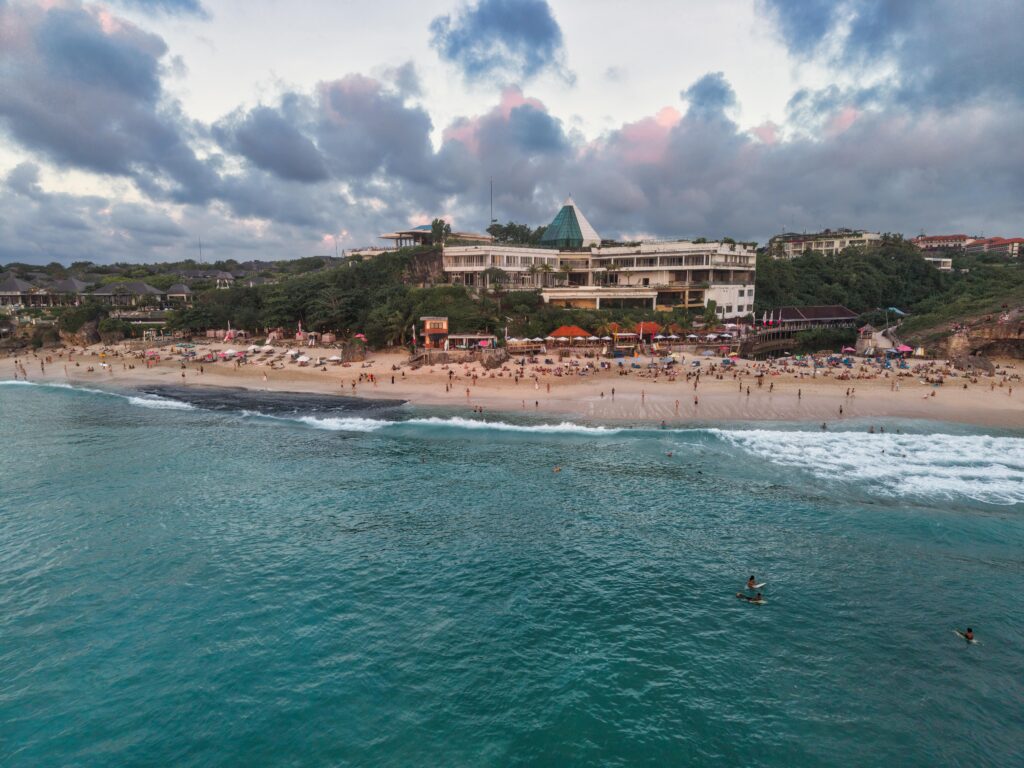
If Banyumala is a whispered secret from the ancestors, then Canggu is a vibrant, modern roar — a place where the ancient rhythm of the tides meets the hum of a global digital pulse.
Just fifteen years ago, this was a quiet expanse of Sawah (rice fields) where the only traffic was a wandering cow or a farmer’s motorbike laden with grass. Today, it is a world-renowned hub. But beneath the neon signs and the aroma of roasted coffee, the “soul” of the village — the Desa Adat — remains, quietly holding its ground.
The Two Faces of the Shore
For local, the ocean is a place of both power and purification. For the original fishing families of Canggu, Batu Bolong and Echo Beach were never “surf spots” — they were the front porches of the gods.
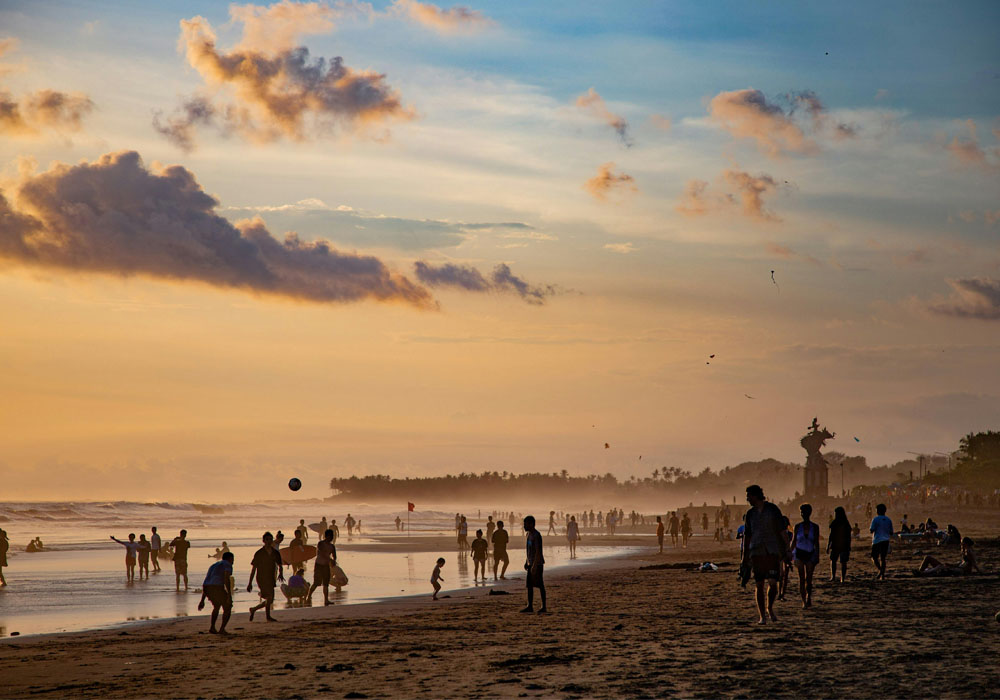
- Pura Batu Bolong: This temple, perched on a rock over the sea, is the spiritual anchor of the village. While tourists watch the sunset with a cocktail, locals are often there in white lace and sarongs, performing Piodalan (temple anniversaries). For us, the sunset isn’t just a photo; it is the time of Sandikala, a sacred transition when the spirits are most active.
- The Black Sand: The volcanic sand of Canggu is considered medicinal and purifying. You will often see Balinese elders burying their legs in the sand at dawn or dusk. They aren’t sunbathing; they are seeking the earth’s energy to heal their joints, a practice passed down through generations.
The Vanishing Sawah and the Subak
The most visible change in Canggu is the retreating green. For centuries, life here was governed by the Subak — the UNESCO – recognized traditional irrigation system. The Subak is the ultimate local wisdom; it is a democratic collective where water is shared equitably, guided by the principle of Tri Hita Karana.
- The Struggle for Balance: In the past, a farmer’s wealth was measured by his harvest. Today, it is measured by land value. There is a quiet tension here. When you see a single, lonely rice field tucked between two high-end villas, you are looking at a family’s final stand to keep their heritage alive.
- The Modern Offering: Even the most modern café in Canggu still places a Canang Sari (flower offering) at its entrance every morning. This is the local way of saying: “I am doing business on this land, and I acknowledge the spirits who were here before me.”
The Banjar: The Village’s Invisible Shield
You might see men in traditional checkered sarongs and black vests standing at busy intersections. These are the Pecalang — the traditional village security.
While Canggu looks like an international city, it is still governed by the Banjar (the local community council). The Banjar is why, despite the massive influx of people, the village ceremonies still take priority over traffic. If there is a funeral procession (Ngaben) or a temple festival, the main road closes. The global world pauses for the Balinese world. This is the “local kind of way”: we welcome the new, but we do not let it erase the sacred.
LEARN HOW TO SURFING IN CANGGU
- Need activities in Canggu? Book Tour or Surf Lesson via GetYourGuide.
The Cultural Alchemy: A New Kind of Harmony
Canggu has become a “melting pot” where local wisdom is adapting. We call this a new form of Pawongan (harmony between humans).
| The Old Canggu | The New Canggu |
| Farmers & Fishermen | Entrepreneurs & Creators |
| Warung feeding the neighbors | Cafés feeding the world |
| Silent nights under the stars | A 24/7 global community |
| Harvesting Rice | Harvesting Ideas (Digital Nomads) |
Local wisdom teaches us to be like the bamboo: strong but flexible. The villagers of Canggu have had to be the most flexible in all of Bali. They have turned their homes into guesthouses and their children have become world-class surf instructors or baristas. They are proud that the world loves their home, even if they miss the silence of the old days.
How to Visit “The Local Way”
If you want to experience the true heart of Canggu, you have to look past the surface.
- Respect the Sandikala: When the sun goes down and you see locals heading to the temple, lower your music or talk softly. It is their time for connection.
- Support the “Sisa” (The Remnants): Eat at the small family – run Warungs that still stand. When you buy a meal there, you are directly supporting a family that has lived in this village for centuries.
- Acknowledge the Water: Before you jump into the waves, take a moment to look at the horizon. The ocean here is the realm of Baruna (the God of the Sea). A simple nod of respect is the Balinese way of asking for safe passage.
The Future of the Village
Canggu is a lesson in Rwa Bhineda — the balance of opposites. It is busy and calm, traditional and trendy, local and global. The wisdom of the village elders says that as long as the temples are still full of incense and the Subak channels still carry water, the soul of Canggu will survive the concrete.
- Where to Sleep? We’ve filtered the best accommodation in Canggu. [Check Local Rates on Agoda or Booking.com].
It is a place that asks you not just to be a spectator, but to be a conscious guest. The “magic” of Canggu isn’t in the trendy clubs; it’s in the smile of a grandmother placing an offering on a busy sidewalk, undeterred by the world rushing past her.